Tennis Management Software
Schedule court bookings, manage group coaching and individual lessons, track player ratings, and handle everything from mini tennis red to full-court adult programmes.
AMES aligns directly with LTA programme structures and mini tennis ball progression stages, giving coaches and administrators a single view across multiple court surfaces and booking types. Whether you run a two-court community club or a multi-surface performance academy with floodlit hard courts and indoor facilities, the platform scales with your operation without bolt-on fees or separate booking systems.
UK Governing Body
Lawn Tennis Association (LTA)
Typical Pricing
£8-£18 per lesson
Class Size
4-8 students
Challenges tennis businesses face

Court booking conflicts
Coaching sessions, social play, match fixtures, and private bookings all compete for court time. Managing priorities and preventing clashes across multiple courts is a daily struggle. Member social bookings overlap with coaching blocks during peak evening hours, and inter-club match fixtures require dedicated courts that displace regular sessions without warning. Floodlight availability windows add another constraint during autumn and winter months, when demand for lit courts far exceeds supply and every fifteen-minute slot carries a premium. Surface-specific scheduling compounds the problem further: clay courts need rest periods and maintenance windows between heavy use, while hard courts and artificial grass surfaces have different booking densities and wear patterns. Without a centralised system that understands court types, lighting availability, and booking priority rules, administrators spend hours each week resolving disputes that could have been prevented at the point of booking.

LTA programme alignment
Keeping coaching programmes aligned with LTA mini tennis stages (red, orange, green, yellow) and tracking which ball colour each child should be on adds admin to every session. The LTA Youth programme structure defines clear competency criteria at each stage, and coaches need to assess players against these benchmarks regularly to ensure progression is evidence-based rather than arbitrary. Mini tennis ball progression from red through orange and green to full yellow is not just about age; it depends on court coverage, rally consistency, and tactical awareness at each level. Tennis Opened Up initiatives encourage clubs to broaden participation beyond traditional membership demographics, which means tracking different programme types and funding streams alongside core coaching. Coach accreditation must align with programme delivery requirements too, as LTA-accredited coaches are expected to deliver sessions that meet national framework standards. Without a system that maps programmes to stages and tracks individual player readiness, clubs risk delivering inconsistent coaching that fails LTA quality audits.
Weather-dependent rescheduling
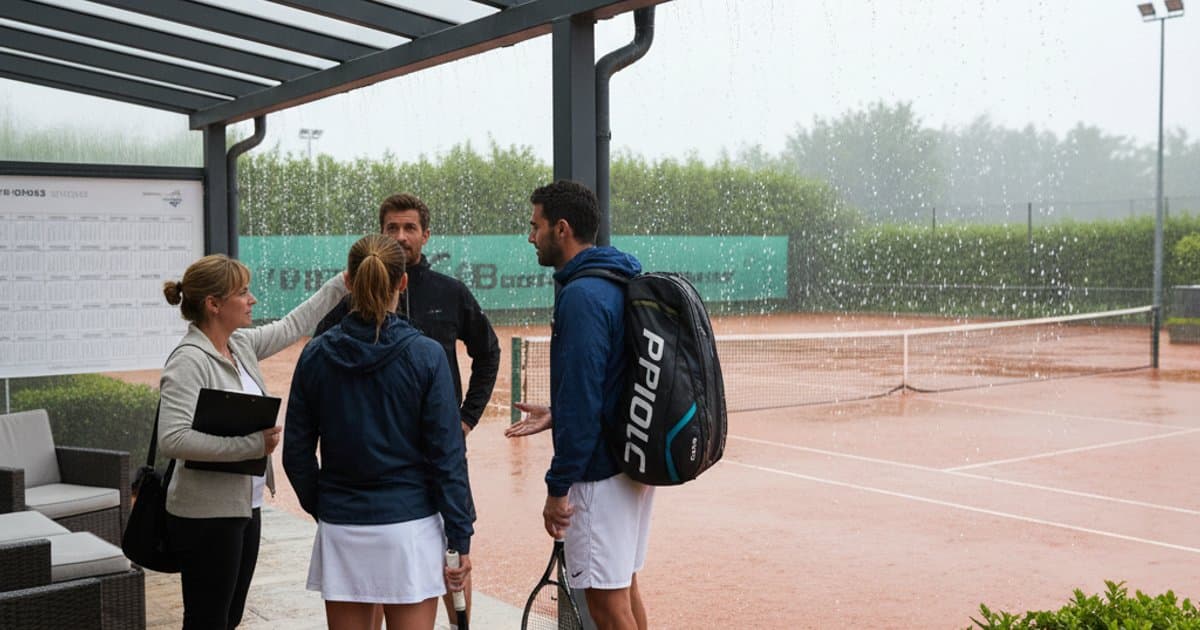
Outdoor sessions get rained off regularly. Rescheduling groups, notifying parents, and managing make-up sessions burns hours during peak season. Surface-specific rain policies add complexity: clay courts become unplayable far sooner than hard courts and need longer drying times before they can be used again, while artificial grass surfaces may remain playable in light drizzle. When outdoor courts are closed, covered court priority allocation becomes contentious as coaching groups, league matches, and social players all compete for limited indoor time. Seasonal demand shifts from outdoor to indoor courts create a bottleneck from October through March that requires careful capacity planning months in advance. Bulk cancellation and refund processing after prolonged bad weather stretches can involve dozens of sessions across multiple coaching groups, each with different payment structures and make-up entitlements. Clubs without automated weather-response workflows spend entire afternoons sending messages, adjusting bookings, and fielding complaints from frustrated members.
Seasonal membership fluctuations
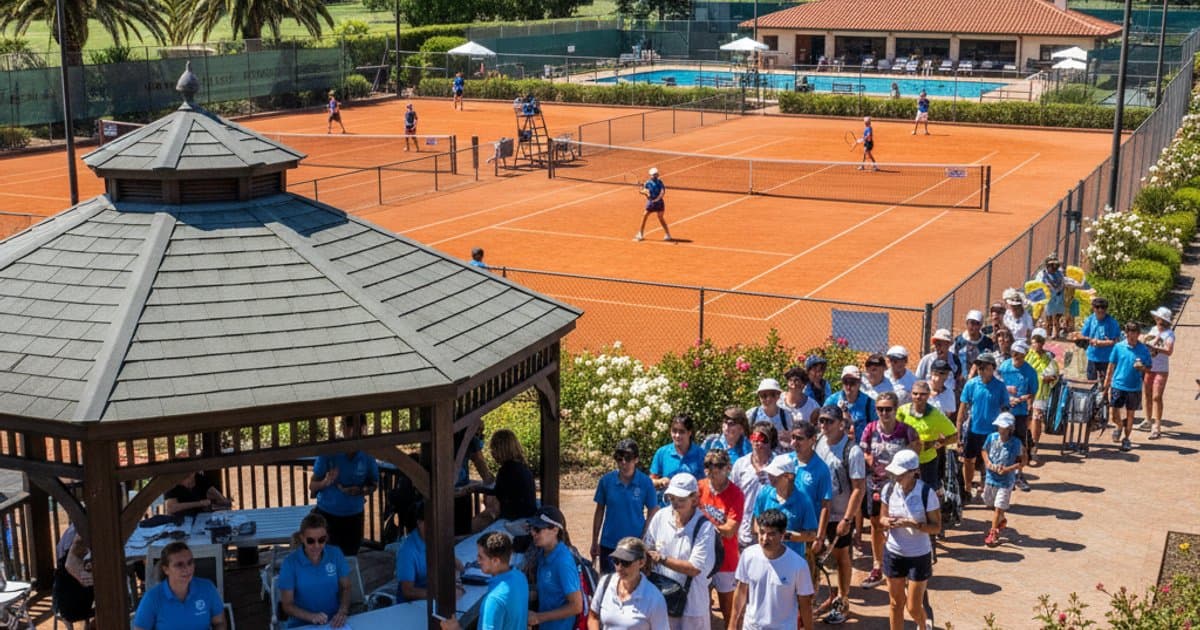
Membership surges in summer and drops in winter. Forecasting court demand, managing variable income, and encouraging year-round engagement requires data you do not have. Summer camp demand spikes place enormous pressure on court availability during school holidays, when coaching programmes, member play, and camp sessions all compete for the same courts simultaneously. Winter coaching programme promotion becomes critical for maintaining revenue, yet many clubs lack the tools to identify lapsed summer members and target them with indoor coaching offers before they disengage entirely. Off-peak pricing strategies can help fill midweek morning courts and encourage adult social play during quieter periods, but implementing variable pricing across different court types, times, and membership categories is a spreadsheet nightmare. Membership type conversions from junior to adult, social to competitive, or summer-only to year-round need tracking to ensure billing adjusts correctly and members receive the right booking privileges for their category.
Guides and articles for tennis businesses
Weather-Dependent Rescheduling for Tennis Clubs
British weather and outdoor tennis have an uneasy relationship. Rain, frost, and high winds can wipe out entire coaching sessions, and how your club handles cancellations and rescheduling has a direct impact on member satisfaction, coach income, and programme continuity. This guide covers surface-specific policies, decision-making protocols, and make-up session management.

Waitlist and Make-Up Session Management for Tennis Clubs
Full coaching groups are a sign of success, but only if you handle the overflow well. A family turned away without a clear waitlist process is a family that goes to a competitor. A child who misses sessions without a make-up option is a family that questions the value of their coaching fees. This guide covers practical systems for waitlists, make-up sessions, and group rebalancing.
Smart Court Scheduling for Tennis Clubs
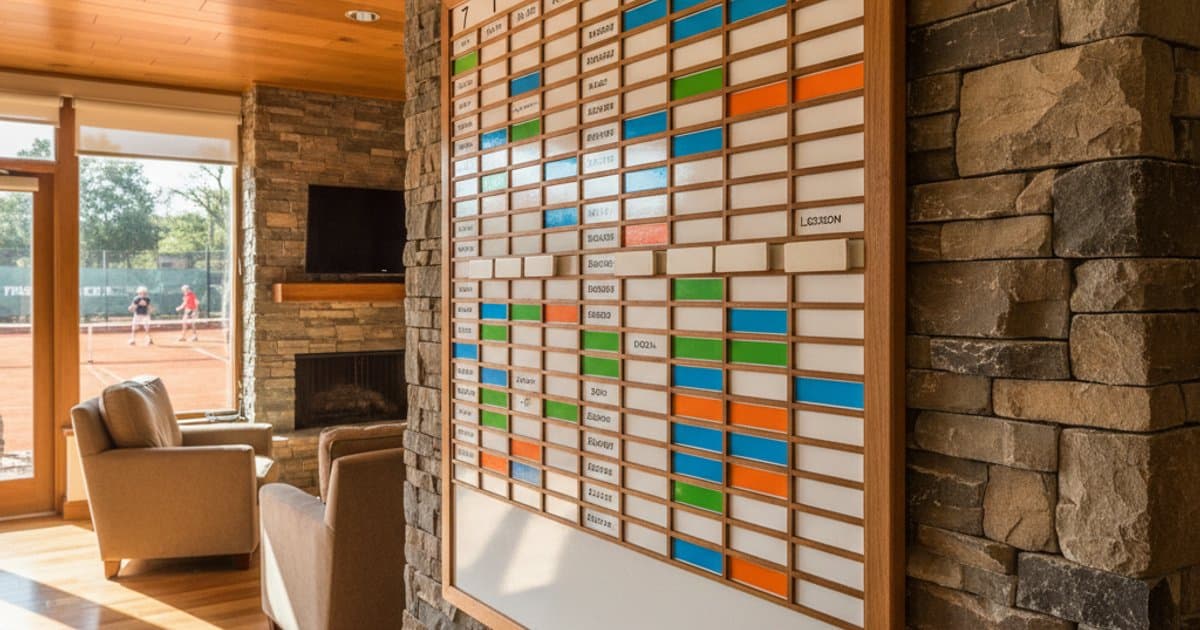
Court scheduling is the operational backbone of every tennis club. Get it right and your courts are full, your coaches are productive, your members are happy, and your surfaces last longer. Get it wrong and you waste capacity, damage courts, frustrate members, and lose revenue. This guide covers the principles and practicalities of smart court scheduling.
Managing Seasonal Membership Fluctuations in Tennis Clubs
Tennis participation in Britain follows a sharp seasonal curve. Wimbledon drives a summer surge, darker evenings trigger a winter drop-off, and clubs that do not plan for these fluctuations end up with overcrowded courts in July and empty ones in January. This guide covers practical strategies for smoothing the curve and retaining members year-round.

Tracking Player Development in Tennis Clubs
Tracking player development is one of the most valuable services a tennis club can offer. Parents want to see their child progressing. Adult improvers want evidence they are getting better. Coaches need data to plan sessions and group players appropriately. Yet many clubs still rely on coaches' memories and informal assessments. This guide covers how to build a structured development tracking system.

Building a Parent and Player Portal for Tennis Clubs
A parent and player portal transforms the relationship between your tennis club and its members. Instead of relying on coaches to relay information at the end of sessions, paper notices pinned to a board, and WhatsApp groups that quickly become chaotic, a portal gives every family a single place to see everything that matters. This guide covers what to include and how to make it genuinely useful.
Aligning Your Coaching Programme with LTA Standards
The LTA sets the framework for how tennis is taught and developed in Britain. Aligning your coaching programme with LTA standards is not just about compliance; it ensures your players progress through a proven pathway and your club can access LTA funding, resources, and recognition. This guide covers mini tennis stages, youth programme requirements, and quality audit preparation.
Managing Court Booking Conflicts in Tennis Clubs
Court booking conflicts are one of the most common sources of friction in tennis clubs. When coaching programmes, social sessions, league matches, and court hire all compete for the same surfaces, disputes are inevitable unless you have clear systems in place. This guide covers priority frameworks, surface-specific rules, floodlight management, and dispute resolution.

Coach and Facility Management for Tennis Clubs
A tennis club is only as good as its coaches and its courts. If your coaches' qualifications lapse, your insurance may be void. If your courts deteriorate, members leave. If your equipment goes missing, sessions suffer. Yet many clubs manage these critical assets with spreadsheets, memory, and good intentions. This guide covers structured approaches to coach and facility management.

Automating Payment Collection for Tennis Clubs
Tennis clubs handle an unusually wide variety of payment types: annual memberships, coaching blocks, individual court bookings, tournament entry fees, guest fees, and floodlight surcharges. Managing these manually with spreadsheets, bank transfers, and envelope collections is a recipe for cash flow problems and administrative burnout. This guide covers how to automate every payment stream in your club.

How to Start a Tennis Coaching Business in the UK
Starting a tennis coaching business in the UK requires the right qualifications, access to courts, and a clear plan for building a programme that keeps players coming back. This guide covers everything from LTA accreditation to pricing your sessions profitably.
How AMES helps tennis providers
Online Lesson & Court Bookings
Manage court allocations for coaching, social play, match fixtures, and private hire. Colour-coded calendars show availability at a glance with automatic clash prevention. Surface-type management lets you configure different booking rules, maintenance windows, and capacity limits for hard courts, clay courts, artificial grass, and indoor surfaces. Floodlight cost allocation is built in, automatically adding lighting surcharges to bookings that fall within floodlit hours and splitting costs fairly across shared sessions. Member versus coaching priority rules ensure that coaching programmes get first access to peak-time courts while social bookings fill remaining availability, with configurable override permissions for committee members and tournament organisers.
Player Progress & Badge Tracking
Track progression through LTA mini tennis stages and beyond. Log stroke technique assessments, match results, and coaching notes visible to players and parents. The LTA rating system integration records official ratings alongside internal club assessments, giving coaches a complete picture of each player's competitive standing. Match win and loss records are tracked across club sessions, inter-club fixtures, and external tournaments, building a performance history that informs coaching priorities. Stroke technique assessments cover forehand, backhand, serve, volley, and movement fundamentals with progressive benchmarks at each stage. Tournament results feed directly into player profiles, so coaches and parents can see competitive development alongside technical progression in a single timeline.
Direct Debit & Term Course Payments
Handle coaching block bookings, annual memberships, pay-and-play sessions, and tournament entry fees. Flexible pricing for juniors, adults, and family memberships. Court hire fees are calculated automatically based on surface type, time of day, and member category, with different rates for peak and off-peak slots. Coaching block bookings can be paid upfront or split into instalments with automated collection reminders. Guest fees for non-members are applied at the point of booking and can be waived for specific events or open days. Floodlight surcharges are added transparently to evening bookings, with clear breakdowns on every invoice so members understand exactly what they are paying for.
Parent Payment App & Player Portal
Parents and players view coaching schedules, court bookings, development progress, and tournament draws. Instant notifications for weather cancellations and rescheduled sessions. LTA programme stage visibility shows parents exactly where their child sits in the mini tennis progression pathway and what skills are needed for the next stage. Match results from club sessions and external competitions appear in a dedicated results feed. Coaching feedback from individual and group sessions is shared after each block, giving families a clear picture of improvement areas and targets. The tournament calendar displays upcoming club championships, inter-club fixtures, and external competition opportunities with one-click entry for eligible players.
Class Waitlists & Make-up Sessions
Manage waiting lists by age and ability. When sessions are rained off, AMES suggests available make-up slots and notifies parents automatically. Priority court booking for coaching cancellations ensures that rained-off groups get first access to rescheduled slots before general availability opens up. Group rebalancing after mid-term dropouts is handled with suggested merges and transfers between coaching groups of similar level, so no group runs below viable numbers while others maintain waiting lists. Parents can self-serve make-up bookings through the portal, choosing from level-matched sessions with remaining capacity.
Coaching Registers & Attendance
Track LTA coaching qualifications, availability, and court allocations. Manage floodlight schedules, court maintenance windows, and facility bookings. Court maintenance scheduling ensures that clay courts receive regular brushing, watering, and line-marking without disrupting peak booking periods. Surface condition tracking logs wear patterns and maintenance history for each court, helping committees plan resurfacing budgets and schedule major works during off-peak months. Net and equipment inventory tracks replacement cycles for nets, posts, windbreaks, ball machines, and coaching aids, with automated reorder alerts when stock runs low. Coach availability syncs with the booking calendar so administrators can see at a glance which courts have coaching cover and which are available for member bookings.
Ready to serve up better tennis club management?
See how AMES can automate bookings, payments, and communication for your tennis business.
Book a Demo