Art Management Software
Schedule workshops and term-time classes, manage materials and supplies, track student portfolios, and handle everything from messy play sessions to advanced adult courses.
From children's after-school art clubs and Saturday morning pottery classes to adult evening life drawing sessions and mixed-media summer workshops, AMES supports every format of creative education. Whether you run a single studio or manage multiple locations with specialist facilities like ceramics kilns and printmaking presses, the platform adapts to your creative business.
UK Governing Body
National Society for Education in Art and Design (NSEAD)
Typical Pricing
£8-£18 per class
Class Size
8-15 students
Challenges art businesses face
Materials and supply management
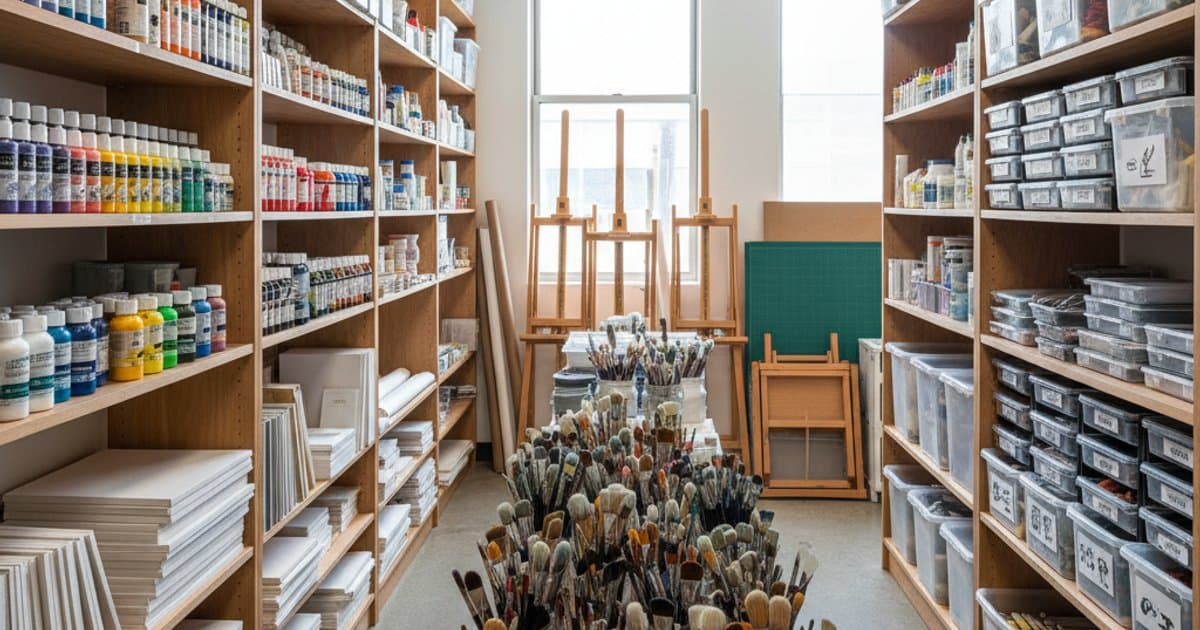
Every class needs different supplies: paints, clay, canvases, fabrics. Tracking stock levels, including material costs in pricing, and ensuring supplies arrive on time is a constant overhead. Kiln firing represents a significant hidden cost—electricity charges per firing cycle, element replacement schedules, and the need to batch fire efficiently rather than running half-empty kilns. Specialist material surcharges for classes using precious metal leaf, resin, or professional-grade oil paints must be calculated and communicated to students before they book, not after. Bulk ordering economics create their own tension: buying clay in tonne lots saves substantially per kilogram, but ties up cash and storage space for months. Seasonal supply variations mean watercolour paper suppliers run low every September as schools restock, and popular glazes sell out before the Christmas pottery rush. Waste management costs for solvents, kiln wash, and contaminated water add an invisible line to your operating expenses that most art schools only discover at year-end.

Mixed-format scheduling
You offer weekly term-time classes, one-off workshops, holiday courses, birthday parties, and adult evening sessions. Each has different pricing, capacity, and setup requirements. Kiln drying time between pottery sessions creates scheduling gaps that cannot simply be filled with another class—greenware needs 24 to 48 hours of controlled drying before bisque firing, and work-in-progress pieces occupy shelf space that limits throughput. Wet work rooms for clay and plaster need different extraction and drainage than dry work rooms for drawing and printmaking, and cross-contamination between the two can ruin equipment and student work. Exhibition installation periods require blocking out studio space for days or weeks, displacing regular classes to alternative rooms or temporary timetable adjustments. Artist-in-residence slots add another scheduling dimension entirely: providing a working artist with dedicated studio access while maintaining your commercial class programme requires careful calendar management that a paper diary cannot handle.

Portfolio and progress visibility
Parents want to see what their child is creating and learning. Without a system, artwork gets sent home in a bag and the learning journey is invisible. Arts Award scheme documentation at Discover, Explore, Bronze, Silver, and Gold levels requires structured evidence portfolios that demonstrate research, creation, and reflection—a significant administrative undertaking for each participating student. Exhibition submission requirements demand high-quality photography with consistent lighting and backgrounds, and three-dimensional work like sculpture and ceramics needs multiple angles to represent the piece fairly. Student consent for portfolio sharing must be managed carefully, particularly for children under 16 where parental consent is required for any images displayed publicly or shared on social media. Photography of three-dimensional work is a skill in itself—poor images undermine the quality of the work and frustrate students who have invested hours in a piece only to see it misrepresented in their digital portfolio.

Age-range and skill-level grouping
Messy play for toddlers and watercolour technique for adults need completely different spaces, staffing, and risk assessments. Managing both under one roof adds complexity. Supervision ratios for under-5s in messy play sessions follow Ofsted guidelines and require significantly more adults per child than older age groups, directly affecting your staffing costs and maximum capacity. Sharp tool policies vary by age: scissors at five, lino cutters at eight, craft knives at twelve, and even then with individual risk assessments and parental consent forms. Kiln access restrictions mean no under-14s in the kiln room unaccompanied, and loading and unloading kilns is strictly an adult task regardless of student ability. Adult evening classes introduce licensing considerations if you serve alcohol at social art events—paint-and-sip sessions are popular revenue generators but require premises licences and designated premises supervisors, adding regulatory compliance to your creative business operations.
Guides and articles for art businesses

Student Portfolio Tracking Systems for Art Schools
A well-implemented portfolio tracking system serves multiple purposes: it demonstrates student progress to parents, provides evidence for Arts Award assessment, builds a body of work for further education applications, and gives your art school a powerful marketing asset. This guide covers practical implementation.
Staff and Room Management for Art Schools
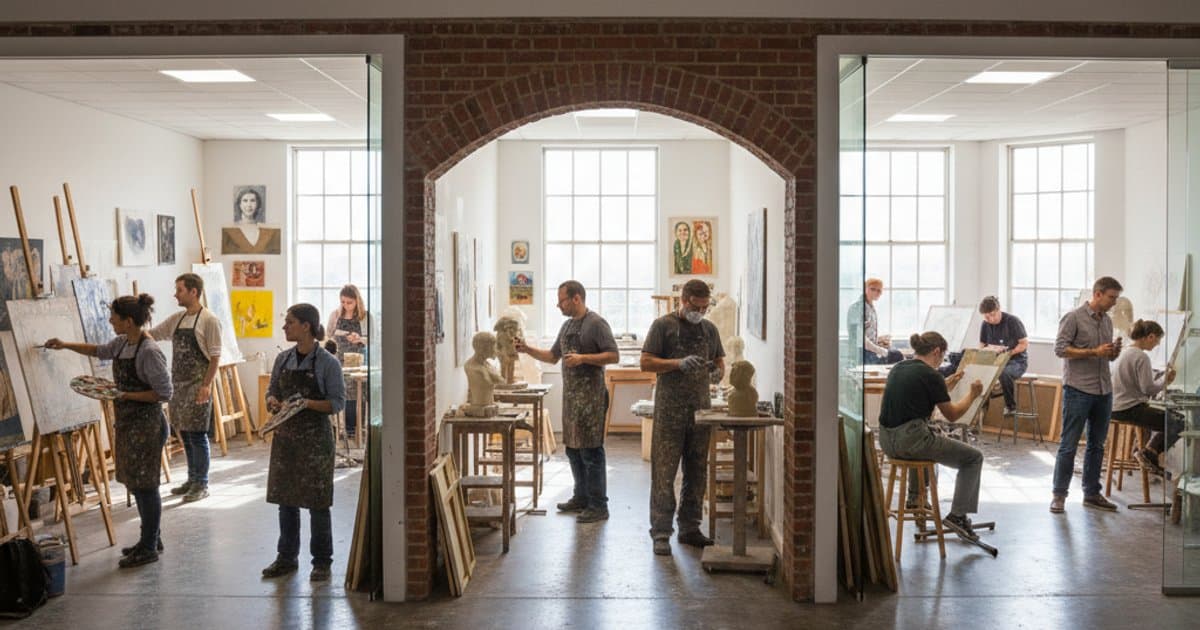
Art schools employ staff with diverse specialisms and use rooms with specialist equipment that requires specific training and certification. Managing which tutors can teach which classes, who is certified to operate which equipment, and how rooms are allocated across your programme is a complex operational challenge. This guide covers practical approaches.
Portfolio and Progress Visibility for Art Schools
Parents want to see what their children are creating and how they are progressing. Students need portfolios for Arts Award submissions and further education applications. This guide covers digital portfolio systems, Arts Award tracking, exhibition management, consent handling, and sharing controls for art schools.

Building a Parent Communication Portal for Art Schools
Art schools generate more parent communication than almost any other children's activity. Between portfolio updates, supply lists, exhibition invitations, schedule changes, and holiday course promotions, the volume of messages can overwhelm both you and your families. A well-designed parent portal centralises everything and keeps communication manageable.
Mixed-Format Scheduling for Art Schools
Art schools rarely run a single class format. You are juggling weekly term-time classes, one-off workshops, holiday courses, birthday parties, and exhibition periods, all while accounting for kiln drying gaps and room turnarounds. This guide explains how to build a schedule that handles every format without descending into chaos.
Materials and Supply Management for Art Schools
Running an art school means managing a constant flow of consumable materials, from clay and glazes to specialist papers and printmaking inks. This guide covers supplier management, bulk ordering strategies, waste reduction, kiln firing costs, and how to build material surcharges into your pricing without driving families away.

Materials and Stock Tracking for Art Schools
Art schools consume a wide range of materials at varying rates, and without proper stock tracking you are either running out mid-class or sitting on expensive surplus. This guide covers per-class costing, reorder point management, waste tracking, and margin analysis to help you control your biggest variable cost.

Flexible Class Scheduling for Art Schools
Art school scheduling needs to accommodate realities that no other activity type faces: kiln cycles that span days, drying times that vary with humidity, exhibition periods that take studios offline, and a mix of formats from weekly classes to one-off workshops. This guide explains how to build a flexible, efficient schedule.

Automating Payment Collection for Art Schools
Chasing payments is one of the biggest time drains for art school owners. Between term fees, materials surcharges, workshop deposits, and one-off event bookings, the billing complexity quickly becomes unmanageable without automation. This guide covers how to set up automated payment collection that handles every revenue stream your art school generates.
Age-Range and Skill-Level Grouping for Art Schools
Art schools face a unique grouping challenge: a child's chronological age does not always match their artistic ability, and different media require different safety considerations at different ages. This guide covers age-appropriate grouping, Ofsted ratio guidance, sharp tool and kiln access policies, adult class considerations, and risk assessments for art activities.

How to Start a Children's Art School in the UK
Starting a children's art school lets you combine creative expertise with genuine business potential. This guide covers qualifications, venue requirements (sinks, ventilation, storage), materials sourcing, curriculum design, exhibition opportunities, and the practical realities of running an art-based business.
How AMES helps art providers
Art Class Scheduling & Booking
Schedule term-time classes, one-off workshops, holiday courses, and private events. Different durations, capacities, and setups handled in one unified calendar. Kiln scheduling is managed as a shared resource with firing cycle durations, cooldown periods, and batch capacity limits enforced automatically. Drying time blocking reserves shelf and room space between pottery sessions so greenware is not disturbed. Exhibition setup windows block affected rooms from regular booking, with temporary timetable adjustments suggested automatically for displaced classes. The calendar handles every format—a two-hour Saturday painting class, a full-day ceramics workshop, and a week-long summer camp—without scheduling conflicts.
Art Progress & Portfolio Tracking
Document student progress with photos and notes. Parents access a digital portfolio showing their child's creative development and completed projects. Arts Award integration tracks evidence requirements for each level, linking class activities and project outcomes to scheme criteria so students build their portfolio as they learn rather than retroactively. Exhibition submission management lets teachers nominate student work for shows with all required imagery and artist statements attached. Parent sharing controls enforce consent preferences at the account level: some families share everything publicly, others restrict visibility to teachers only, and the system respects these settings across every touchpoint including social media exports and printed materials.
Payments & Direct Debit for Art Classes
Handle term fees, workshop deposits, material surcharges, and gift vouchers. Price different class types appropriately and manage refunds for cancelled sessions. Material surcharge auto-calculation adds per-student costs for specialist supplies—precious metal leaf, resin kits, professional-grade canvases—at the point of booking so students know the full price before they commit. Workshop deposit collection secures places with a percentage upfront and collects the balance automatically before the event date. Gift voucher management supports purchase, redemption, expiry tracking, and balance enquiries through the parent portal, making vouchers a genuine revenue stream rather than an accounting headache.
Parent App for Art Class Updates
Parents view their child's class schedule, portfolio, and upcoming workshops. Send supply lists, project briefs, and exhibition invitations through the platform. Portfolio photo sharing gives parents a window into their child's creative development between pickups, with new images and teacher commentary appearing in their feed as work is completed. Supply list distribution for specialist classes ensures parents know what to bring—or what not to bring—before each session, reducing last-minute scrambles and substitutions. Exhibition invitation management handles RSVPs, visitor numbers, dietary requirements for private views, and access details, turning your end-of-term show into a polished event without separate event management software.
Materials & Stock Tracking
Log materials per class type, track consumption, and set reorder alerts. Factor material costs into class pricing to protect margins. Per-class material costing breaks down the exact supply cost for each session type, giving you accurate margin data across your programme—knowing that a ceramics workshop costs three times the materials of a drawing class directly informs your pricing strategy. Supplier reorder integration connects to your regular suppliers with pre-configured order templates, so restocking is a one-click operation when alerts trigger. Waste and recycling tracking logs disposal volumes for solvents, glazes, and contaminated materials, helping you monitor environmental impact and comply with local authority waste regulations for creative businesses.
Staff, Studio & Kiln Scheduling
Assign staff to sessions based on specialism and qualification. Manage room bookings, equipment availability, and setup/teardown time between classes. Specialism matching ensures ceramics classes are taught by pottery-qualified instructors, printmaking sessions by print technicians, and textiles workshops by staff with sewing machine and loom experience. Equipment safety certification tracking monitors who is trained on the kiln, the printing press, the laser cutter, and other specialist equipment, preventing unqualified staff from being rostered for sessions that require specific technical competencies. DBS checks, first-aid qualifications, and safeguarding training are tracked alongside creative credentials for a complete compliance picture.
Ready to paint a better picture for your art school?
See how AMES can automate bookings, payments, and communication for your art business.
Book a Demo