Martial Arts Management Software
Track belt gradings, manage class registrations, handle grading fees, and coordinate with examining bodies. Whether you teach karate, judo, taekwondo, or MMA, AMES adapts to your art.
AMES supports every martial art's unique grading system, from karate's kyu and dan ranks to BJJ's belt colours and judo's mon grades. Whether you run a single-discipline dojo or a multi-art martial arts centre with hundreds of students, the platform scales with you and keeps every progression pathway distinct and accurate.
UK Governing Body
British Martial Arts & Boxing Association (BMABA)
Typical Pricing
£6-£12 per class
Class Size
10-20 students
Challenges martial arts businesses face

Belt and grading administration
Tracking who is eligible for grading, collecting grading fees, coordinating with examiners, and updating student records after each grading event is a manual, error-prone process. Each art has its own minimum attendance requirements before a student can be put forward for grading, and when you run multiple disciplines under one roof, you may have several grading events per month, each with different panels and criteria. Coordinating external examiner availability, booking the right hall, producing grading day running orders, and then updating every student record afterwards consumes entire weekends. Factor in certificate production and distribution, notifying parents of results, and updating belt records across your system, and it becomes clear why so many schools still rely on handwritten logs that inevitably fall out of date.

Mixed-rank class management
Running sessions with white belts alongside brown belts means different techniques, different partner requirements, and different attention levels within the same class. Safety is paramount when sparring is involved: pairing a lightweight beginner with a heavy advanced student is a safeguarding risk, not just a teaching inconvenience. Instructors must split groups within a single session, matching partners by size and experience while ensuring intermediate students receive focused attention rather than getting lost between the beginners who need constant guidance and the seniors who can train independently. Without a system that tracks each student's rank, weight category, and training history, class planning relies entirely on the instructor's memory, which breaks down as the school grows.
Multi-discipline complexity
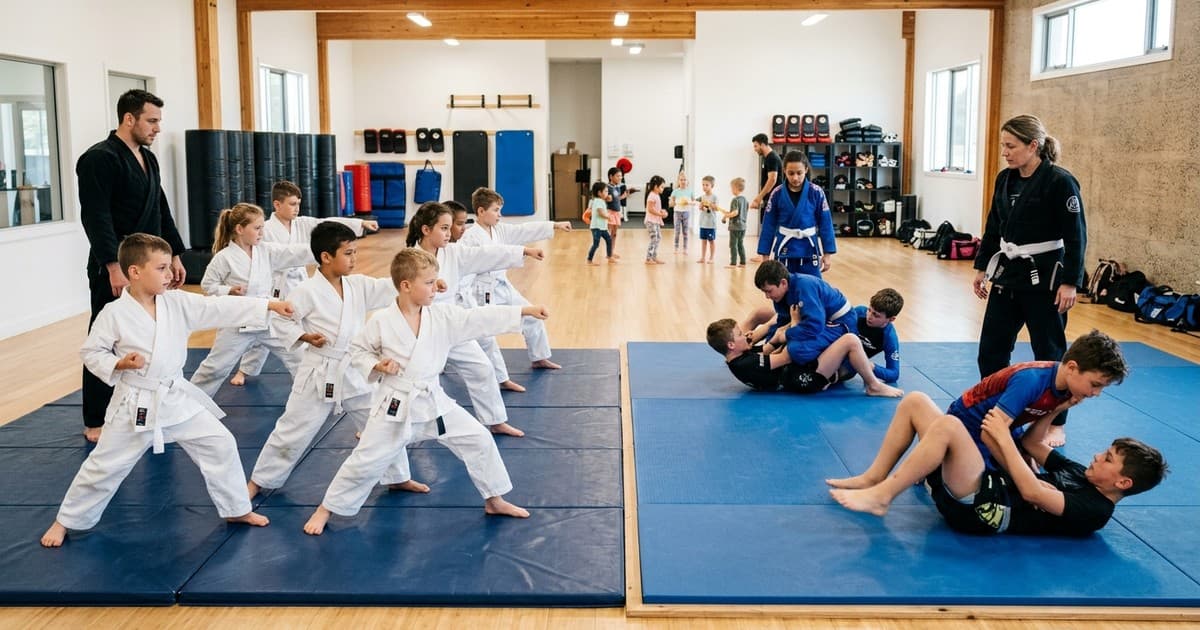
If you teach multiple arts under one roof, each has its own grading system, terminology, and progression pathway. A single spreadsheet cannot handle this. Karate uses the kyu and dan system with coloured belts varying by association, judo has its own mon and kyu grades with distinct technical requirements, and BJJ follows a completely different belt progression with stripe-based milestones. Cross-training students who attend multiple disciplines need unified membership management but separate progression tracking for each art. Different governing bodies impose different requirements for instructor qualifications, insurance, and affiliation, meaning your compliance obligations multiply with every discipline you add. Managing separate fee structures for each art while offering combined membership discounts adds another layer of complexity.

Irregular attendance patterns
Many martial arts students attend on a pay-per-class basis with irregular attendance. Tracking who has paid, who has a membership, and who owes grading fees is a tangle. Some students train five times a week across multiple classes, while others drop in once a fortnight when their schedule allows. Your school may offer monthly unlimited memberships, pre-purchased class packs of ten or twenty sessions, and single pay-per-visit options simultaneously. Each model has different implications for grading eligibility, since most associations require minimum attendance hours before a student can grade. Collecting grading fees on top of regular payments, at the right time, from the right students, while accounting for credits and outstanding balances, turns payment administration into a constant headache.
Guides and articles for martial arts businesses
Smart Class Scheduling for Martial Arts Schools
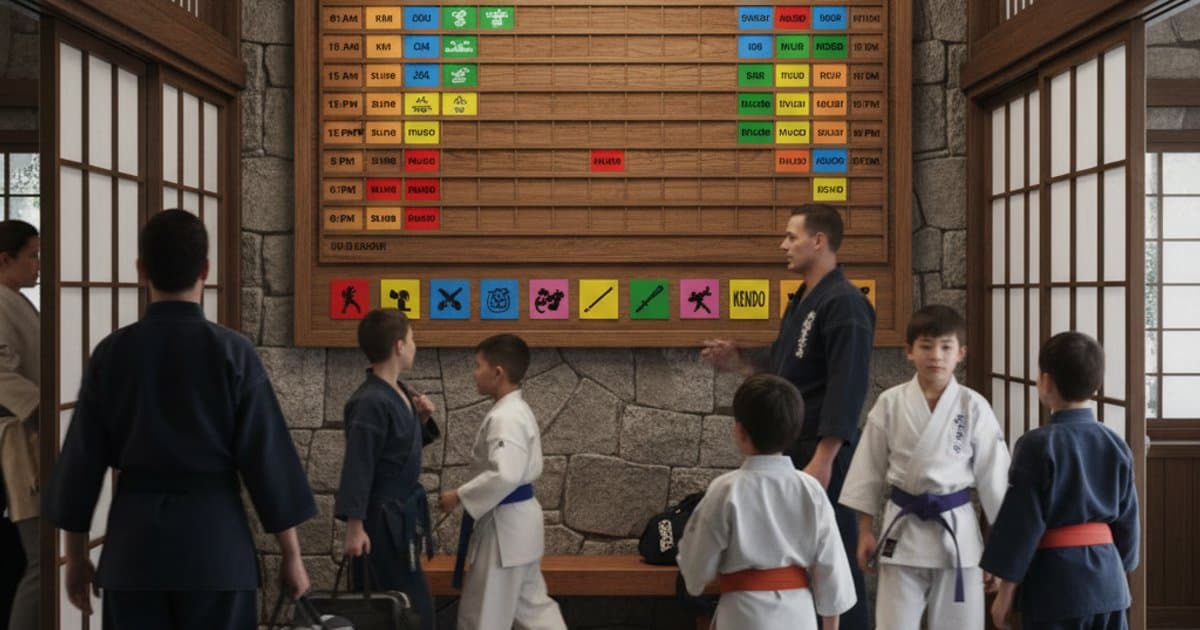
Scheduling martial arts classes is more complex than most activity providers realise. Belt levels, age groups, weight considerations, and the need for rank-appropriate training all influence who should train in which session. This guide covers the scheduling strategies that keep students safe, progressing, and coming back.

Building a Parent and Student Portal for Martial Arts Schools
A parent and student portal transforms your martial arts school from a class they attend into a platform they engage with daily. This guide covers the features that matter most: belt history, grading dates, technique reference, attendance tracking, and syllabus access.
Managing Multiple Disciplines in Martial Arts Centres
Running a multi-discipline martial arts centre offers compelling business advantages but introduces operational complexity. This guide covers how to manage separate grading systems, unified memberships, instructor compliance across disciplines, and the practical challenges of operating karate, judo, BJJ, and MMA under one roof.
Managing Mixed-Rank Classes in Martial Arts Schools
Most martial arts schools cannot offer a separate class for every belt level. Mixed-rank classes are a practical reality, but they require careful planning to keep every student safe, challenged, and progressing. This guide covers the strategies that make mixed-rank training work.

Instructor and Compliance Management for Martial Arts Schools
Martial arts instructor compliance is uniquely complex. Dan grades, governing body affiliations, discipline-specific qualifications, DBS checks, safeguarding training, and insurance all need tracking across every instructor. This guide covers how to build a compliance system that keeps your school legal and your instructors current.

Grading Event Management for Martial Arts Schools
Grading events are high-stakes occasions for students, parents, and your school's reputation. Getting the logistics right requires systematic planning from candidate selection through to result communication. This guide covers every stage of grading event management.

Building Belt and Grading Progression Systems for Martial Arts
A well-designed progression system does more than track belt colours. It gives students clear goals, parents visible evidence of development, and instructors a structured framework for assessment. This guide covers how to build progression systems that work across different martial arts disciplines.
Belt and Grading Administration for Martial Arts Schools
Belt gradings are the backbone of student progression in any martial arts school, but they generate a significant administrative workload. This guide covers eligibility tracking, fee collection, examiner coordination, record-keeping, and certificate production to help you run gradings smoothly.

Automating Payment Collection for Martial Arts Schools
Martial arts schools juggle more payment types than almost any other activity provider. Monthly memberships, pay-per-session fees, grading charges, equipment purchases, and family discounts all need to be collected reliably. This guide covers how to automate the entire payment lifecycle.
Managing Irregular Attendance Patterns in Martial Arts Schools
Martial arts schools face a unique attendance challenge: students attend irregularly due to work schedules, injuries, and training intensity, yet their grading progression depends on consistent attendance. This guide covers payment models, attendance tracking, grading eligibility, and reconciliation strategies.

Starting a Martial Arts School
Martial arts is one of the most rewarding activities to teach, building discipline, confidence, and physical fitness. This guide covers the essentials of starting a martial arts school, from choosing your governing body to setting up your dojo.
How AMES helps martial arts providers
Belt Grading & Tracking Software
Define custom grading pathways for any martial art. Track student progress through kyu and dan grades, manage grading eligibility criteria, and record results automatically. Create custom belt colours and names for each discipline, set minimum training hour requirements before students can be put forward for grading, and build technique checklists for every grade so students and parents know exactly what is expected. Whether your school follows a traditional Japanese ranking system or a modern hybrid structure, AMES adapts to your progression framework.
Class Scheduling & Online Booking
Schedule classes by belt level, age group, or discipline. Set minimum and maximum ranks for each session and automatically suggest suitable classes for new students. Rank-appropriate class filtering ensures beginners are not placed in advanced sessions, while capacity limits by belt level help instructors manage mixed-ability groups safely. New students receive personalised class recommendations based on their experience, age, and goals, reducing the admin burden of onboarding and ensuring every student starts in the right place from day one.
Direct Debit & Payments
Handle monthly memberships, pay-per-session, grading fees, and equipment purchases. Flexible payment options match the way martial arts schools actually operate. Grading fees are auto-collected when a student is confirmed as eligible, removing the need to chase payments before grading day. Equipment shop integration lets you sell uniforms, belts, sparring gear, and branded merchandise through the same platform. Family membership discounts are calculated automatically for households with multiple students, and all transactions flow into a single financial dashboard.
Parent App & Student Portal (Connect)
Students and parents view their belt history, upcoming grading dates, required techniques for the next grade, and attendance records. All accessible from any device. The portal includes syllabus access with technique videos linked to each grade, so students can review what they need to practise at home. A grading history timeline shows every belt earned, the date it was awarded, and the examiner who assessed it. Attendance streak tracking motivates regular training and gives instructors visibility into student commitment levels ahead of grading events.
Grading Event Management & Registers
Organise grading events with eligible student lists, examiner scheduling, fee collection, and result recording. Post-grading, records update automatically. Book examiner availability and manage grading panel schedules across multiple disciplines from one calendar. Generate grading day running orders that sequence students by rank and discipline, share them with examiners in advance, and publish results to parents and students with a single action. Automated result notifications celebrate student achievements and update belt records without manual data entry.
Instructor & Coach Compliance Software
Track instructor dan grades, DBS checks, governing body memberships, and first aid certifications. Ensure every person on the mat meets your compliance standards. Dan grade verification confirms instructor qualifications against governing body records for each art taught. Governing body membership tracking per discipline ensures your school maintains affiliation with every relevant association, and insurance certificate management alerts you before any policy lapses. A single dashboard gives you a complete compliance picture across all instructors and all disciplines.
Ready to master your martial arts admin?
See how AMES can automate bookings, payments, and communication for your martial arts business.
Book a Demo