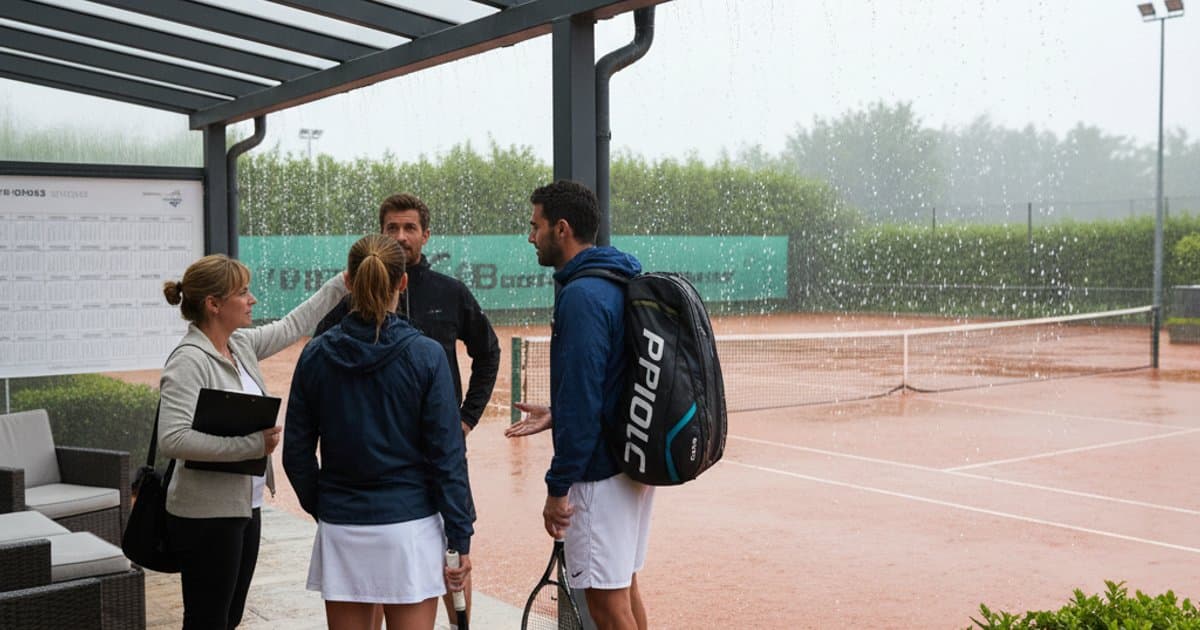
The Real Cost of Weather Cancellations
A typical UK tennis club running outdoor coaching programmes can expect to lose between 10 and 20 per cent of scheduled sessions to weather between October and March. For a club running 40 coaching hours per week, that could mean 200 or more lost coaching hours across a winter season. Each cancellation affects coach income, disrupts player development, and creates administrative work as staff handle refunds, credits, or rescheduling.
The financial impact goes beyond lost session fees. Coaches on hourly contracts lose income and may seek work elsewhere. Parents who experience repeated cancellations without clear communication or resolution become dissatisfied and are less likely to rebook. And the administrative burden of manually contacting families, tracking credits, and finding make-up slots can consume hours of staff time each week.
The clubs that manage weather disruption best are those that have clear, published policies, surface-appropriate decision rules, and systems that automate as much of the communication and rescheduling as possible.
Surface-Specific Rain Policies
Not all court surfaces respond to rain in the same way, and your cancellation policy should reflect this.
Clay Courts
Clay courts are the most weather-sensitive surface. They should not be used during rain and typically need several hours of drying time afterwards, depending on drainage quality. Playing on wet clay damages the surface, creates dangerous footing, and is expensive to repair. Your policy should state clearly that clay courts are closed during and for a specified period after rainfall, and that this is non-negotiable regardless of how light the rain appears.
Artificial Grass Courts
Modern artificial grass courts with sand or sand-and-rubber infill drain well and can often be played on during light rain. However, heavy or sustained rainfall will make them slippery and unsuitable for coaching, particularly junior coaching where safety margins must be wider. Your policy might allow play to continue in drizzle but require cancellation in persistent rain.
Hard Courts (Acrylic/Macadam)
Hard courts vary enormously in drainage. Well-maintained acrylic surfaces with proper gradient can drain within 30 minutes of rain stopping. Older macadam courts may hold standing water for hours. The specific drainage characteristics of your courts should inform your policy, and you should test and document drying times for each court.
Indoor Courts
If your club has indoor courts or access to a nearby indoor facility, these become critical assets during bad weather. Your policy should specify how indoor court priority is allocated when outdoor sessions are cancelled. Common approaches include giving priority to the youngest juniors (who are most affected by disruption), rotating indoor access across coaching groups each week, or prioritising groups that have already lost sessions that term.
Decision-Making Protocols
One of the biggest sources of frustration for parents and coaches is inconsistency in cancellation decisions. One coach cancels at the first drop of rain while another plays through a downpour. The solution is a clear protocol that removes subjective judgment.
- Define a decision-maker: Nominate one person (usually the head coach or club manager) who makes all weather cancellation decisions for each time block. This ensures consistency.
- Set a decision time: For afternoon junior sessions, the decision should be made by a specific time (e.g., 2pm) so parents are not left waiting. For morning sessions, decide by 7am.
- Use objective criteria: Base decisions on specific conditions such as standing water on courts, sustained rainfall at decision time, Met Office warnings, or temperature below a certain threshold for frost risk.
- Communicate immediately: Once a decision is made, notify all affected families instantly. A management platform like AMES can send bulk notifications via email or push notification within minutes of the decision being logged.
Parents can accept cancellations. What they cannot accept is finding out at the court that the session has been cancelled, or receiving inconsistent decisions from different coaches. Consistency and early communication are everything.
Bulk Cancellation and Make-Up Management
When a full evening or weekend morning of coaching is rained off, you may need to cancel 10 or more groups simultaneously. Doing this manually, contacting each group individually, tracking who has been notified, and logging credits, is unsustainable at scale.
Bulk Cancellation Workflow
An effective bulk cancellation process looks like this: the decision-maker logs the cancellation in your system, selects all affected sessions, and triggers notifications in one action. The system automatically applies credits or extends enrolments for affected participants. Parents receive a notification explaining the cancellation, what happens to their payment, and when the make-up session will be scheduled.
Make-Up Session Strategies
There are several approaches to make-up sessions, and the right one depends on your court capacity and scheduling flexibility:
- Scheduled make-up weeks: Build one or two make-up weeks into each term from the start. These are empty slots that absorb weather cancellations. If no sessions are cancelled, they become bonus sessions.
- Extended terms: If cancellations occur, extend the term by the equivalent number of weeks. This works well if your facility is not constrained by school term dates.
- Credit for future booking: Apply a credit to the family's account that can be used against any future booking. This is the simplest approach administratively but can feel less satisfactory to parents who want their child to receive the coaching they paid for.
- Weekend make-up sessions: Offer dedicated make-up sessions on a weekend. This works if you have spare court capacity but requires coaches to be available.
The approach you choose should be clearly stated in your terms and conditions at the point of enrolment, not communicated for the first time when cancellations happen.
Key Takeaways
- Publish surface-specific policies so members understand why clay courts close but hard courts may stay open in the same conditions.
- Nominate a single decision-maker for each time block to ensure consistent cancellation calls across all coaching groups.
- Set and honour decision deadlines so parents always know by a specific time whether sessions are running.
- Automate bulk cancellation notifications to eliminate the administrative burden and ensure no family is missed.
- Build make-up capacity into your term structure from the start rather than scrambling to find slots after cancellations occur.