The Multi-Discipline Opportunity
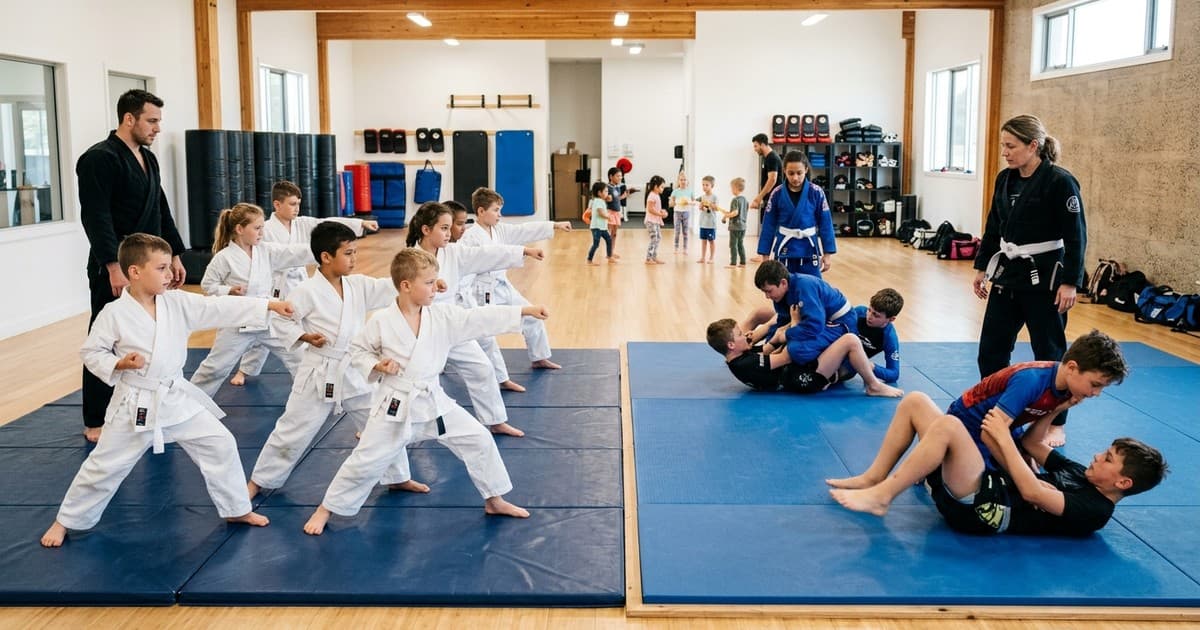
The traditional model of a single-discipline dojo serving one martial art is increasingly being replaced by multi-discipline centres offering karate, judo, BJJ, taekwondo, kickboxing, MMA, and other combat sports under one roof. The business logic is compelling: a broader range of disciplines attracts a wider audience, reduces the risk of losing members who want to try something new, and maximises the use of your training space throughout the week.
However, multi-discipline centres face operational challenges that single-art schools do not. Each discipline has its own grading system, governing body, insurance requirements, and instructor qualifications. A student's judo grade has no bearing on their karate grade. A BJJ purple belt may be a complete beginner in taekwondo. Managing these parallel systems while presenting a unified, professional experience to members is the central challenge of running a multi-discipline centre.
This guide addresses the practical operational issues and the systems you need to manage them effectively.
Separate Grading Systems Under One Roof
Each martial art has its own grading structure, and these must be maintained independently. There is no shortcut here: a student's progress in each discipline must be tracked, assessed, and recorded according to that discipline's standards.
Grading Systems You Will Encounter
- Karate: The kyu/dan system. Beginners start at a high kyu number (typically 9th or 10th kyu, white belt) and progress downward to 1st kyu (brown belt), then upward through dan grades (1st dan black belt and beyond). Colours vary by organisation but a common sequence is white, orange, red, yellow, green, purple, brown, black.
- Judo: For children under 8, the BJA uses mon grades (a series of coloured stripes). For older children and adults, the kyu/dan system applies with its own colour sequence: white, yellow, orange, green, blue, brown, then dan grades (black). The BJA has strict age requirements for certain grades.
- BJJ: A five-belt system for adults (white, blue, purple, brown, black) with stripes (up to four) on each belt indicating progress. Progression is typically slower than in striking arts, with blue belt commonly taking 2 to 3 years. Children use a separate colour system with grey, yellow, orange, and green belts.
- Taekwondo: Similar kyu/dan structure (called gup/dan in Korean terminology) with 10 gup grades progressing to 1st gup, then dan grades. Colour sequences vary by organisation (ITF and WT use different systems).
- MMA/Kickboxing: Many MMA and kickboxing organisations do not use a formal belt system, though some have adopted grading structures. Where no formal system exists, you may implement your own level system for class placement purposes.
Managing Parallel Records
Your student management system must support multiple grade records per student. A single member might hold an orange belt in karate, a yellow belt in judo, and a white belt with two stripes in BJJ. Each of these grades has its own date, its own eligibility criteria for the next grade, and its own attendance requirements. A platform like AMES allows you to configure separate grading pathways per discipline while maintaining a single unified member profile, so you are not duplicating member contact details or payment information across separate systems.
Unified Membership and Pricing
Membership Models
- Single-discipline membership: The student pays for access to one martial art only. This is the simplest model and works well if your disciplines have minimal crossover. Typical pricing in the UK ranges from £40 to £70 per month for two to three sessions per week.
- Multi-discipline membership: The student pays a premium for access to two or more disciplines. This is attractive to students who want variety and to parents whose children want to try different arts. Pricing is typically 30% to 50% more than a single-discipline membership, representing a saving compared to paying for each discipline separately.
- Unlimited membership: Access to all disciplines and all sessions. This is the premium tier, typically £80 to £120 per month, and appeals to serious students and adults training regularly.
Family and Multi-Discipline Discounts
Family discounts are important in martial arts, where it is common for siblings or even parents and children to train together. A typical structure is full price for the first family member, 10% to 15% off for the second, and 20% off for the third and subsequent members. When combined with multi-discipline options, the pricing matrix can become complex. Your management system needs to handle these combinations automatically to avoid manual calculation errors and to present clear pricing to families at the point of enrolment.
Instructor Compliance Across Disciplines
Each discipline requires its own instructor qualifications, and each governing body has its own compliance requirements. This creates a significant administrative overhead in a multi-discipline centre.
Governing Body Affiliations
In the UK, the major governing bodies include the British Judo Association (BJA) for judo, the English Karate Federation (EKF) and various style-specific organisations for karate, British Taekwondo (WT-affiliated) and TAGB/ITF organisations for taekwondo, and the UKBJJA (UK Brazilian Jiu-Jitsu Association) for BJJ. Each has its own instructor licensing, insurance, and safeguarding requirements.
You must ensure that every instructor teaching at your centre holds current qualifications and affiliation with the relevant governing body for their discipline. An instructor qualified in karate cannot teach judo, regardless of their personal experience. This seems obvious, but in multi-discipline centres where instructors are enthusiasts across several arts, the boundaries can become blurred.
Cross-Discipline Compliance Tracking
For each instructor, track: their coaching qualifications per discipline, governing body membership and licence status, DBS check status and renewal dates, first aid certification, safeguarding training, and professional indemnity insurance. A single instructor teaching two disciplines needs compliance tracking for both. Automated expiry alerts are essential to avoid the situation where an instructor's qualification in one discipline lapses while their other qualifications remain current.
A multi-discipline centre with five instructors across three disciplines could easily have 30 or more compliance documents to track. Manual tracking with spreadsheets becomes unreliable at this scale.
Timetabling and Space Management
Different disciplines have different space requirements. Judo and BJJ require matted areas (tatami), karate and taekwondo can be practised on sprung wooden floors or matting, and MMA typically needs a caged or roped area for sparring. If your centre has a single training space, you need to consider how to transition between disciplines efficiently.
Timetable your disciplines to minimise changeover. Group mat-based arts (judo, BJJ, wrestling) together, followed by standing arts (karate, taekwondo, kickboxing). Allow 15 minutes between sessions for any equipment changes and for students to arrive and change. Avoid scheduling the same instructor for back-to-back sessions in different disciplines without adequate rest.
Key Takeaways
- Maintain completely separate grading records per discipline for each student, with discipline-specific eligibility criteria and attendance tracking.
- Offer tiered membership pricing (single-discipline, multi-discipline, unlimited) with family discounts to maximise enrolment and revenue.
- Track instructor compliance per discipline independently, including governing body affiliation, coaching qualifications, DBS, and insurance for each art they teach.
- Use a management platform that supports multiple grading pathways and unified member profiles to avoid duplicating records across separate systems.
- Timetable mat-based and standing disciplines in blocks to minimise changeover time and maximise your training space utilisation.