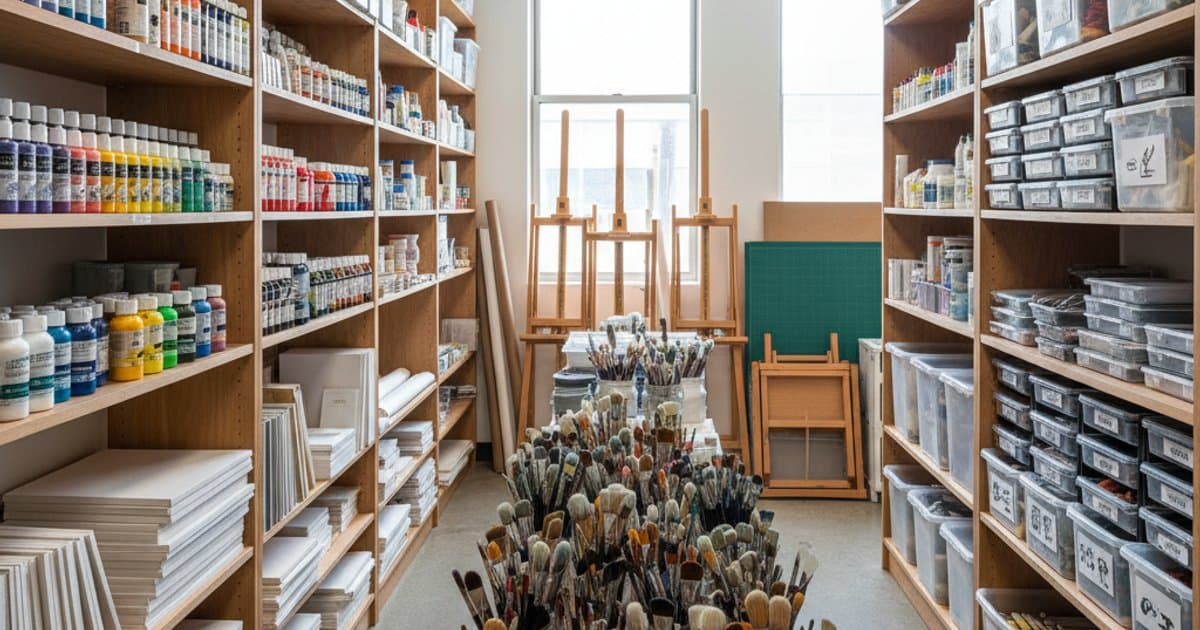
Why Materials Management Matters More in Art Than Almost Any Other Activity
If you run a swimming school, your biggest consumable is pool chemicals. If you run a football academy, it is bibs and cones. But if you run an art school, your materials costs can rival your staffing costs. Every session consumes something, whether that is clay, paper, paint, ink, fabric, or specialist media. Children and adults alike are experimenting, making mistakes, starting again, and using more than you planned for. That is the nature of creative education, and it is exactly what makes supply management so critical to your financial health.
The difference between an art school that runs profitably and one that struggles often comes down to how well it manages its materials pipeline. Get this right and you protect your margins while still giving students the quality materials they need to produce work they are proud of. Get it wrong and you either blow your budget or compromise the learning experience by rationing supplies.
This guide covers every aspect of materials management for art schools in the UK, from building supplier relationships to tracking waste and building costs into your pricing model.
Understanding Your True Materials Costs
The first step is knowing exactly what you spend. Most art school owners can tell you roughly what they pay for clay or paper, but few have a precise per-session or per-student materials cost. Without this number, you cannot price your classes accurately.
Per-Class Costing
Start by listing every material used in a typical session for each class type. A children's pottery class might use 500g of clay per child, a tablespoon of glaze, kiln shelf paper, and cleaning materials. A printmaking workshop for adults might use specialist paper, ink, cleaning solvents, and disposable gloves. Price each item at your current purchase cost and divide by the number of students to get a per-head materials cost.
For a typical children's pottery class, expect materials costs of £2 to £4 per child per session. For adult workshops using specialist media such as oil painting or printmaking, costs can rise to £5 to £12 per person per session. Kiln firing adds another layer, which we will cover separately.
Kiln Firing Costs
Kilns are expensive to run. A standard 7 cubic foot electric kiln firing to 1260 degrees Celsius for stoneware uses approximately 30 to 50 kWh of electricity per firing. At current UK electricity rates (approximately 24p to 30p per kWh for business tariffs in 2026), a single firing costs £7 to £15 in electricity alone. Factor in kiln furniture replacement, element wear, and the labour time for loading, unloading, and quality-checking, and the true cost per firing is closer to £15 to £30.
Most art schools fire each piece twice: a bisque firing and a glaze firing. If you have 20 pieces in a kiln load, that works out at roughly £1.50 to £3 per piece for both firings combined. This must be factored into your class pricing or charged as a separate firing fee.
Many successful art schools charge a separate 'kiln fee' or 'materials fee' of £3 to £6 per session on top of the tuition fee. This makes the cost transparent to parents and covers your consumables without inflating the headline class price.
Specialist Surcharges
Some sessions use significantly more expensive materials than others. Adult oil painting classes, metalwork workshops, glass fusing sessions, and printmaking courses all carry higher material costs. Rather than averaging costs across all classes (which penalises your cheaper-to-run sessions), apply a specialist surcharge to the classes that warrant it. Parents and adult learners understand that oil paint costs more than poster paint, and they expect to pay accordingly.
Building Supplier Relationships
Your choice of suppliers has a direct impact on both your costs and the quality of your teaching materials. In the UK, the main educational art suppliers include Specialist Crafts (now part of the Findel Education group), Pottery Crafts, Bath Potters Supplies, Cromartie Kilns, Great Art, and Jackson's Art Supplies. Each has different strengths.
Negotiating Trade Accounts
All major suppliers offer trade accounts with discounts for educational providers. Typical trade discounts range from 10% to 30% depending on the supplier and your order volume. To open a trade account, you usually need to provide proof of your business registration and evidence that you are an educational provider. Some suppliers also offer additional discounts for orders above certain thresholds, so consolidating your purchasing with fewer suppliers can save money.
Bulk Ordering Strategy
Clay is the easiest material to buy in bulk because it stores well if kept sealed and damp. A 10kg bag of stoneware clay costs approximately £8 to £12, but buying a pallet (typically 40 to 60 bags) can reduce the per-bag cost by 20% to 35%. Paper, canvas, and dry materials also store well. Paints, inks, and glazes have shelf lives, so bulk buying only makes sense if you will use the stock within six to twelve months.
Place your biggest orders at the start of each term when you know your class numbers. Keep a minimum stock level for each core material so you never run out mid-term, but avoid over-ordering perishable supplies.
Delivery and Lead Times
Art supplies in the UK typically ship within two to five working days for stock items. Specialist items, imported papers, and custom-mixed glazes can take two to four weeks. Plan your orders with enough lead time to avoid emergency purchases at full retail price, which is one of the fastest ways to erode your margins.
Waste Management and Reduction
Waste is inevitable in art education, but it is controllable. The key areas where waste occurs are clay reclaim, paint and ink waste, paper offcuts, and failed firings.
Clay Reclaim
Unfired clay is fully recyclable. Set up a reclaim system with a dedicated bucket for clay scraps, a plaster bat or drying area, and a process for re-wedging reclaimed clay. A well-run reclaim system can recover 15% to 25% of your clay purchases. Some schools involve students in the reclaim process as a teaching exercise about sustainability and material properties.
Paint and Ink Management
Pre-measure paint and ink for each session rather than letting students help themselves from large containers. This simple change can reduce paint waste by 30% to 50%. Use palette knives to scrape unused paint back into containers. For acrylics, keep a misting bottle to prevent palette paint from drying out during sessions.
Paper and Fabric
Keep a box of offcuts for collage work, test prints, and warm-up exercises. What would be waste in one class becomes a resource in another. Encourage students to use both sides of paper for sketching and practice work.
Kiln Failures
Kiln failures, whether from pieces exploding, glaze crawling, or elements failing mid-firing, represent the most expensive form of waste. Reduce failures by ensuring clay is thoroughly dried before bisque firing (a minimum of five to seven days, longer for thick pieces), testing new glazes on sample tiles before using them on student work, and maintaining your kiln according to the manufacturer's schedule. Budget for a 5% to 10% failure rate and treat anything better as a bonus.
Environmental Responsibilities
Art schools generate waste that requires specific disposal. Glaze chemicals, solvents, and some inks cannot go into general waste. Under the Environmental Protection Act 1990 and Hazardous Waste Regulations, you have a duty of care to dispose of waste correctly.
- Glazes and chemicals: Many contain metal oxides (cobalt, copper, manganese) that are classified as hazardous. Use a licensed waste carrier for disposal.
- Solvents (turpentine, white spirit): Must be collected in sealed containers and disposed of through a hazardous waste service. Never pour down drains.
- Clay and plaster waste: Do not wash large quantities down sinks as they will block drains. Use settling tanks or let clay water evaporate and dispose of the solid residue in general waste.
- Kiln furniture and broken ceramics: These go in general waste but can be heavy, so check your waste collection limits.
Integrating Materials Costs into Your Pricing
There are three common approaches to handling materials costs in your class pricing, and each has trade-offs.
All-Inclusive Pricing
The class fee includes all materials. This is the simplest model for parents and works well for children's classes with predictable material usage. The risk is that your margins erode if material costs rise or students use more than expected.
Tuition Plus Materials Fee
Charge a separate tuition fee and materials fee. This makes your costs transparent and allows you to adjust the materials fee each term without changing your headline price. Many art schools charge a termly materials fee of £15 to £40 per student depending on the class type.
Bring Your Own Materials
Common for adult evening classes, where students purchase their own paints, brushes, and canvases. This eliminates your materials cost but creates an inconsistent experience and can be off-putting for beginners who do not know what to buy. If you use this model, provide a clear materials list with recommended suppliers and budget options.
Key Takeaways
- Calculate your per-student, per-session materials cost for every class type and review it each term.
- Kiln firing costs are significant. Either build them into your pricing or charge a transparent firing fee.
- Build trade accounts with two or three core suppliers and consolidate orders to maximise discounts.
- Implement clay reclaim and paint pre-measuring to reduce waste by 20% to 40%.
- Comply with hazardous waste regulations for glazes, solvents, and chemicals.
- Choose a pricing model (all-inclusive, tuition-plus-materials, or bring-your-own) that fits your student demographic and review it annually.