The Staffing Challenge Unique to Art Schools
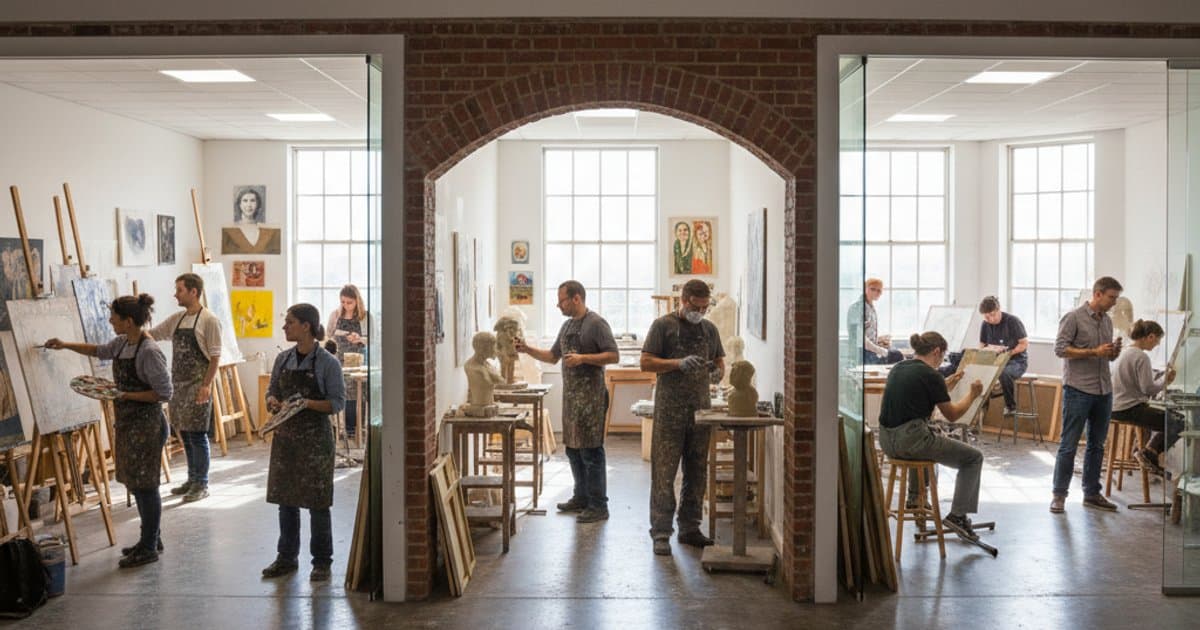
Most children's activity providers employ staff with a single, common qualification. Swimming teachers hold an STA or Swim England teaching certificate. Football coaches hold FA qualifications. The skill set is largely interchangeable between sessions. Art schools are different. Your team might include a ceramicist, a printmaker, a painter, a textiles specialist, a sculptor, and a mixed-media generalist, each with different skills, different training, and different equipment certifications. A pottery tutor cannot necessarily teach printmaking, and a painting tutor should not be operating the kiln without specific training.
This creates a staffing puzzle that goes beyond simple scheduling. You need to match tutors to classes based on their specialism, ensure every tutor has the right safety certifications for the equipment in their room, maintain current DBS checks and safeguarding training, plan cover arrangements that account for specialism, and develop your team's skills to increase your scheduling flexibility over time.
This guide covers each of these challenges with practical, implementable solutions.
Specialism Matching
The first step in effective staff management is documenting exactly what each tutor can teach and what equipment they are certified to use.
Building a Skills Matrix
Create a skills matrix that lists every tutor against every class type and piece of specialist equipment. Use a three-tier system:
- Lead: Can plan and deliver this class or operate this equipment independently.
- Assist: Can support a lead tutor in this class or use this equipment under supervision.
- Not qualified: Cannot teach this class or use this equipment.
A typical skills matrix for a small art school might look like this: your ceramics tutor is rated 'Lead' for wheel throwing, hand building, and kiln operation, 'Assist' for glazing workshops, and 'Not qualified' for printmaking. Your printmaking tutor is 'Lead' for printmaking and drawing, 'Assist' for painting, and 'Not qualified' for kiln operation. Your generalist tutor is 'Lead' for drawing and mixed media, 'Assist' for painting and hand building, and 'Not qualified' for wheel throwing, kiln operation, and printmaking.
This matrix immediately shows you where you have single points of failure. If only one tutor can operate the kiln and they are ill, you have a problem. If only one tutor can teach printmaking and they leave, you lose an entire programme area.
Scheduling Against the Matrix
When building your timetable, your scheduling system must check each class assignment against the skills matrix to ensure the assigned tutor has a 'Lead' rating for that class type. If you use a platform like AMES, you can tag each tutor with their specialisms and set up rules that prevent mismatched assignments. This is especially important when arranging cover for absence, as a well-intentioned but unqualified cover tutor can create both quality and safety issues.
Equipment Safety Certification
Art schools contain equipment that is genuinely dangerous if misused. Kilns, printing presses, power tools, and chemical processes all require specific training and, in some cases, formal certification.
Kiln Operation Certification
There is no statutory certification requirement for kiln operation in the UK, but best practice is to treat it as a formal competency. Create an internal kiln operation certification that requires a tutor to complete training on your specific kiln model and programme settings, demonstrate safe loading and unloading procedures, understand the emergency shutdown process, pass a knowledge check on temperature profiles, firing schedules, and common faults, and be assessed by an experienced operator before being certified. Keep a dated record of every tutor's kiln certification and require annual refresher training.
Printing Press Operation
Etching presses, letterpress equipment, and screen printing setups all have specific operational procedures and safety considerations. Document the correct operating procedure for each piece of equipment, the safety precautions (particularly around solvent use in etching and screen printing), the cleaning and maintenance routine, and the process for reporting faults. Only tutors who have completed your documented training and been assessed should operate these machines.
Chemical Handling
Under COSHH (Control of Substances Hazardous to Health) regulations, every member of staff who handles hazardous substances must be trained in the risks associated with those substances, the correct handling procedures, the use of personal protective equipment (PPE), and the emergency procedures if something goes wrong (spills, skin contact, inhalation). For art schools, the most common hazardous substances are kiln glazes containing metal oxides, printmaking solvents (turpentine, white spirit, etching mordants), resin and catalysts for casting, and spray fixatives and varnishes. Keep a COSHH file with Safety Data Sheets for every hazardous substance on your premises. Review it annually and whenever you introduce a new product.
DBS Checks and Safeguarding
Every member of staff who works with children must hold a current Enhanced DBS check with a Children's Barred List check. This is non-negotiable and applies to tutors, assistants, volunteers, and any other adult who has regular unsupervised contact with children during your sessions.
Managing DBS Renewals
DBS checks do not expire, but they are only accurate on the day they are issued. Best practice is to renew every three years, or use the DBS Update Service (which costs the individual £13 per year) to enable instant online status checks. Maintain a spreadsheet or database entry for every team member showing the date of their last DBS check, their DBS certificate number, whether they are registered with the Update Service, and the date of their next renewal. Set reminders at least three months before each renewal date, as the DBS application process can take four to six weeks.
Safeguarding Training
All staff working with children should complete Level 1 safeguarding training before their first session and refresh it every two to three years. Your Designated Safeguarding Lead (DSL) should hold Level 3 safeguarding training and refresh it every two years. Safeguarding training is available from the NSPCC, local safeguarding partnerships, and sector-specific bodies such as the NSEAD (National Society for Education in Art and Design). Costs range from free (for basic online courses) to £150 for in-depth, in-person training.
Single Central Record
Maintain a Single Central Record (SCR) listing every member of staff and volunteer with their DBS status, safeguarding training dates, first aid certification, right-to-work documentation, and any other regulatory requirements. This is a requirement for Ofsted-registered settings and best practice for all children's activity providers. Store the SCR securely with restricted access and update it in real time as documentation is renewed.
Room Allocation and Setup
Art schools use their physical space intensively and often need to reconfigure rooms between sessions. Effective room management is as important as effective staff management.
Room Profiles
Create a profile for each room or space you use, documenting its capacity (for different configurations), the equipment permanently installed (kiln, press, easels, sinks), the activities it is suitable for (pottery, painting, drawing, printmaking, mixed media), the setup and turnaround time required between different activity types, and any restrictions (ventilation requirements for solvents, weight limits for heavy equipment). Use these profiles when scheduling to ensure classes are always assigned to appropriate rooms. A drawing class does not need the kiln room, and a pottery class needs reliable access to sinks and a wedging table.
Shared Equipment Management
If multiple classes share specialist equipment (a printing press, a kiln, a plaster mixing area), schedule access explicitly. The most common source of friction in shared art spaces is one class overrunning into another's equipment slot, or a tutor leaving equipment dirty or in an unsafe state for the next user. Clear protocols, written on laminated cards posted next to each piece of equipment, set expectations that everyone can see and follow.
Health and Safety Compliance
Your rooms must comply with health and safety requirements including adequate ventilation (especially important for rooms with kilns, solvents, or spray equipment), appropriate fire safety equipment (extinguishers suitable for the risks present in each room), clear emergency exits that are never blocked by equipment or stored work, adequate lighting for the type of work being done, and first aid supplies accessible within each teaching space. Conduct a formal health and safety inspection of each room at the start of every term and after any significant change to the room layout or equipment.
Key Takeaways
- Build and maintain a skills matrix mapping every tutor to every class type and piece of specialist equipment.
- Identify single points of failure in your skills matrix and invest in cross-training to build resilience.
- Create internal certification programmes for kiln operation, printing press use, and any other specialist equipment.
- Maintain a COSHH file with Safety Data Sheets for every hazardous substance and ensure all relevant staff are trained.
- Keep a Single Central Record of DBS checks, safeguarding training, and other regulatory documentation, updated in real time.
- Create room profiles documenting capacity, equipment, suitable activities, and turnaround times, and use them when scheduling classes.