The Scheduling Challenge for Multi-Style Studios
A studio offering only vinyasa flow has simple scheduling. Every class needs roughly the same setup, the same temperature, the same props, and the same capacity. A multi-style studio offering hatha, vinyasa, yin, restorative, hot yoga, and perhaps aerial or wall rope yoga has a fundamentally different problem.
Each style has different room requirements, different prop needs, different optimal group sizes, and different energy levels. Scheduling a high-energy power class immediately before a meditation session in the same room creates an atmosphere clash that neither group enjoys. Hot yoga requires heating lead time and cool-down time that blocks the room for other uses.
Getting this right requires thinking about your schedule as a system, not a collection of individual classes.
Room Setup and Transition Planning
Temperature Management
Hot yoga is the biggest scheduling constraint in a multi-style studio. Heating a room to thirty-five or forty degrees takes time, and cooling it back down takes even longer. If you offer hot yoga, consider these approaches:
- Dedicated hot room: If your studio has multiple spaces, dedicate one to heated classes. This eliminates temperature transition issues entirely.
- Block scheduling: Group all hot classes together in a morning or afternoon block, with non-heated classes before and after. Allow at least sixty minutes of transition time to cool the room.
- End-of-day heating: Schedule hot classes as the last sessions of the day, so the room can cool naturally overnight.
Prop Requirements
Different styles need different equipment. A restorative class might need bolsters, blankets, eye pillows, and straps for every student. A vinyasa class might need only mats. A yin class needs blocks and bolsters.
Build prop setup requirements into your scheduling system so that whoever prepares the room knows exactly what is needed. Allow five to ten minutes between classes for prop changeover, and factor this into your published schedule. A class listed at 10:00 should not require students from the 9:00 class to clear out while the next group is arriving.
Sound and Atmosphere
Sound systems matter more in yoga than in most activities. A yin class might use gentle ambient music at low volume. A power vinyasa class might use upbeat playlists. A yoga nidra session needs near-silence. If your studio uses a shared sound system, ensure teachers can quickly switch between presets rather than fumbling with settings while students wait.
Capacity Management Across Styles
Different Styles, Different Numbers
A standard vinyasa class in a room that fits twenty-five mats might only safely accommodate twelve students for a restorative class (because bolsters and blankets take up additional floor space) and perhaps fifteen for a yin class. Aerial yoga might cap at eight, depending on your rig setup.
Your booking system must enforce style-specific capacity limits, not a single room maximum. A common mistake is setting room capacity at twenty-five and applying it to every class, resulting in an overcrowded restorative session where students cannot fully extend in supported postures.
- Map capacity per style: Calculate the actual safe capacity for each style in each room, accounting for props, equipment, and movement space.
- Set waitlists by style: A waitlist for a twelve-person restorative class should trigger differently from a waitlist for a twenty-five-person flow class.
- Communicate clearly: If a popular style has low capacity, show the limited availability prominently in your booking system to encourage early booking.
Level Scheduling and Progression
Defining Your Levels
Level naming in yoga is notoriously inconsistent across the industry. One studio's "intermediate" is another's "beginner-friendly." Adopt clear, descriptive level names and publish what they mean:
- Foundation: No experience required. Basic postures, breathing techniques, modifications offered throughout.
- All levels: Suitable for students with some experience. Options given for different abilities.
- Intermediate: Assumes familiarity with sun salutations, standing postures, and basic inversions.
- Advanced: For experienced practitioners comfortable with arm balances, deeper backbends, and longer holds.
Scheduling Levels Thoughtfully
Place foundation classes at times accessible to beginners: early evening on weekdays and mid-morning on weekends. Beginners are often working around a full-time job and cannot attend a 6:30 AM class. Advanced classes can go in early morning or lunchtime slots, as committed practitioners tend to have more schedule flexibility.
Your timetable communicates your values. If every beginner class is in an inconvenient time slot, you are telling new students they are not a priority. They will find a studio that makes them feel welcome.
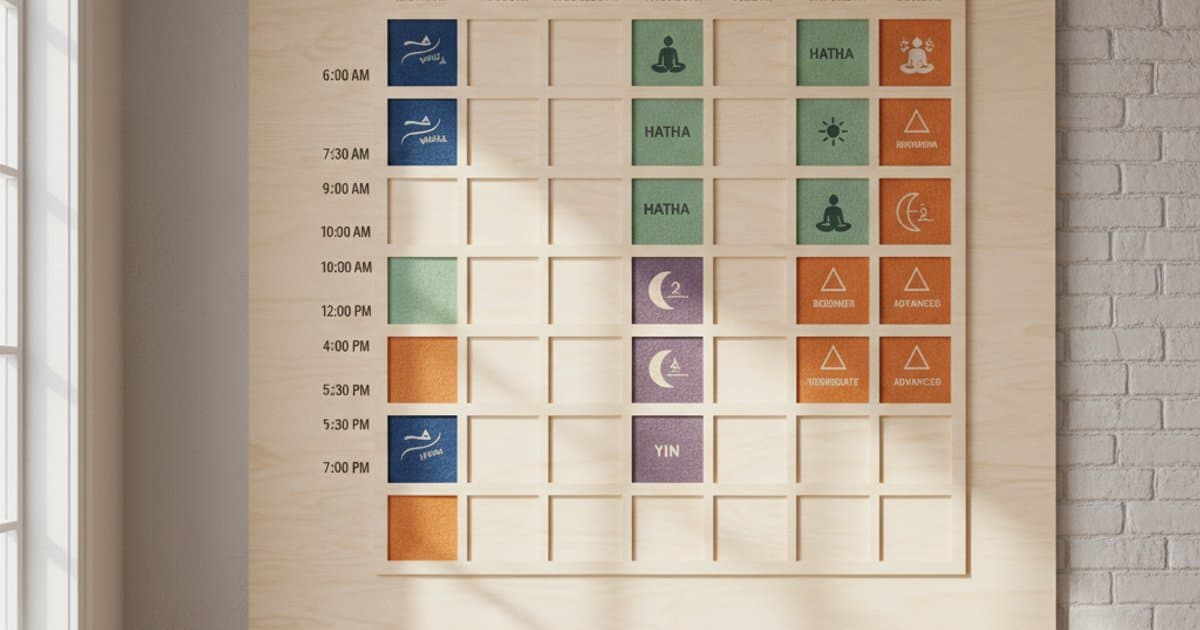
Building Your Weekly Timetable
A practical approach to multi-style scheduling:
- Map your constraints first: Hot room availability, teacher specialisms, and peak demand times.
- Layer in high-demand styles: Vinyasa flow and hot yoga typically fill first. Schedule these at peak times.
- Balance with slower styles: Yin, restorative, and meditation classes work well as evening wind-down sessions or weekend afternoon offerings.
- Allow adequate transitions: Ten to fifteen minutes between classes minimum. Twenty to thirty minutes after hot classes.
- Review quarterly: Attendance data should drive timetable changes. If your Thursday yin class averages three students while Friday vinyasa has a waitlist, your schedule needs adjusting.
Key Takeaways
- Set style-specific room capacities: One room number does not fit all yoga styles. Props, equipment, and movement space vary dramatically.
- Plan temperature transitions: Hot yoga scheduling requires dedicated rooms or buffer time that affects your entire timetable.
- Define levels clearly and schedule them accessibly: Beginners should not be stuck with inconvenient time slots.
- Use attendance data to evolve your timetable: Quarterly reviews based on real numbers prevent stale schedules and wasted capacity.