Why Children's Yoga Is a Growing Market
Children's yoga has moved from niche to mainstream in the UK over the past five years. The drivers are clear: rising awareness of children's mental health, increased screen time creating a need for mindful movement, and schools actively seeking wellbeing programmes for their pupils. The NHS has explicitly recommended yoga and mindfulness as beneficial for children's emotional regulation, and parents are listening.
From a business perspective, children's yoga occupies an attractive niche. Startup costs are remarkably low, class sizes are manageable, and the crossover potential with schools, nurseries, and other children's activity providers creates multiple revenue streams. The market is less saturated than mainstream sports, which means there is genuine room for new providers in most areas.
This guide covers the practical steps to set up and grow a children's yoga business in the UK.
Teacher Training and Certification
Teaching yoga to children is fundamentally different from teaching adults. Children's bodies are developing, their attention spans are shorter, and the teaching methodology requires creativity, storytelling, and play rather than instruction and correction.
Adult Yoga Qualification First
Most children's yoga training providers require you to hold an adult yoga teacher qualification before enrolling on a children's course. The industry standard is a 200-hour Yoga Teacher Training (YTT) registered with Yoga Alliance Professionals (the UK body) or Yoga Alliance (international). A 200-hour YTT costs between £1,500 and £3,500 and takes three to twelve months to complete depending on the format (intensive residential, weekend modules, or online).
If you already have a background in education, childcare, or children's activity provision, some children's yoga training courses accept you without a full adult YTT, but having one strengthens your credibility significantly.
Children's Yoga Teacher Training
Specialist training is essential. The main UK-available options are:
- Yoga Alliance Professionals (YAP) Children's Yoga Training: Various accredited providers offer 80 to 95-hour courses covering child development, age-appropriate sequencing, trauma-informed practices, and safeguarding. Costs range from £500 to £1,200.
- Rainbow Kids Yoga: An internationally recognised training programme available in the UK. The core training is typically a 3-day intensive costing £350 to £500, with additional modules for babies, teens, and children with special needs.
- Cosmic Kids approach: While Cosmic Kids is primarily a YouTube channel, Jaime Amor (the creator) offers teacher training workshops and online courses. The storytelling-based methodology is particularly effective for younger children. Courses cost approximately £200 to £400.
- Tatty Bumpkin / YogaBugs: Franchise-based models that include training. If you prefer to operate under an established brand with a ready-made curriculum, these offer a structured pathway (franchise fees vary from £2,000 to £8,000 plus ongoing royalties).
Additional Qualifications
- Enhanced DBS check: £38, mandatory for working with children
- Safeguarding training: £20 to £35
- Paediatric first aid: £80 to £150 (required if working with under-5s in a registered setting)
- British Wheel of Yoga membership (the UK governing body): approximately £67 per year, which includes public liability insurance for teaching
The British Wheel of Yoga is the recognised governing body for yoga in the UK. Their membership provides credibility, insurance, and CPD opportunities. If you hold a BWY-recognised qualification, your insurance is included in your membership fee.
Venue Requirements
Children's yoga has modest venue requirements, which is one of the great advantages of this business.
What You Need
- Clean, warm, flat floor space: Approximately 3 to 4 square metres per child. A class of 10 children needs a minimum of 30 to 40 square metres.
- Temperature control: Children (and adults) relax better in warmth. Cold village halls in January will empty your classes. Aim for at least 20 degrees Celsius.
- Quiet environment: Unlike a football session, yoga requires relative calm. Avoid venues with concurrent noisy activities in adjacent rooms.
- Natural light: Not essential, but greatly improves the atmosphere.
- Changing and toilet facilities: Necessary for younger children particularly.
Venue Options
- Church and community halls: £10 to £25 per hour. Often warm, quiet, and available during off-peak hours.
- School halls and classrooms: £10 to £20 per hour, with the added advantage of a built-in audience for after-school sessions.
- Nurseries and children's centres: Many welcome visiting yoga teachers and will pay you directly (£25 to £50 per session) to deliver as part of their programme.
- Yoga studios: If you have a relationship with a local studio, they may offer you a daytime slot for children's classes at a reduced rate or revenue-share basis.
- Outdoor spaces: Parks and gardens work beautifully in summer. Free to use (with council permission) and a wonderful marketing opportunity. Not viable year-round in the UK, obviously.
Venue Costs
Budget £10 to £25 per hour for hall hire. If you run two one-hour classes back-to-back on a Saturday morning, that is £20 to £50 in venue costs.
Props and Equipment
You do not need much, but what you have should be high quality and well maintained.
Essential Equipment
- Children's yoga mats (set of 12 to 15): £100 to £200. Children's mats are thinner and shorter than adult mats. Many teachers prefer to have children bring their own mats, which reduces cost and hygiene concerns.
- Yoga blocks (set of 10): £30 to £60. Cork or foam blocks help children access poses safely.
- Straps (set of 10): £20 to £40. Useful for stretching and partner work.
- Eye pillows or relaxation aids: £15 to £30. A beanbag or small weighted pillow placed on the tummy during relaxation helps children settle.
- Bluetooth speaker: £20 to £50. For background music during relaxation and movement activities.
- Visual aids: Yoga pose cards, story props, puppets, scarves. Budget £30 to £80 depending on your teaching style.
Total Startup Equipment Cost
A complete equipment set costs £200 to £450. If children bring their own mats, you can reduce this to under £150.
Class Structure by Age Group
The way you teach yoga to a four-year-old is entirely different from how you teach a twelve-year-old. Here is a proven structure for each age group.
Toddlers and Pre-Schoolers (ages 2 to 4, with parent)
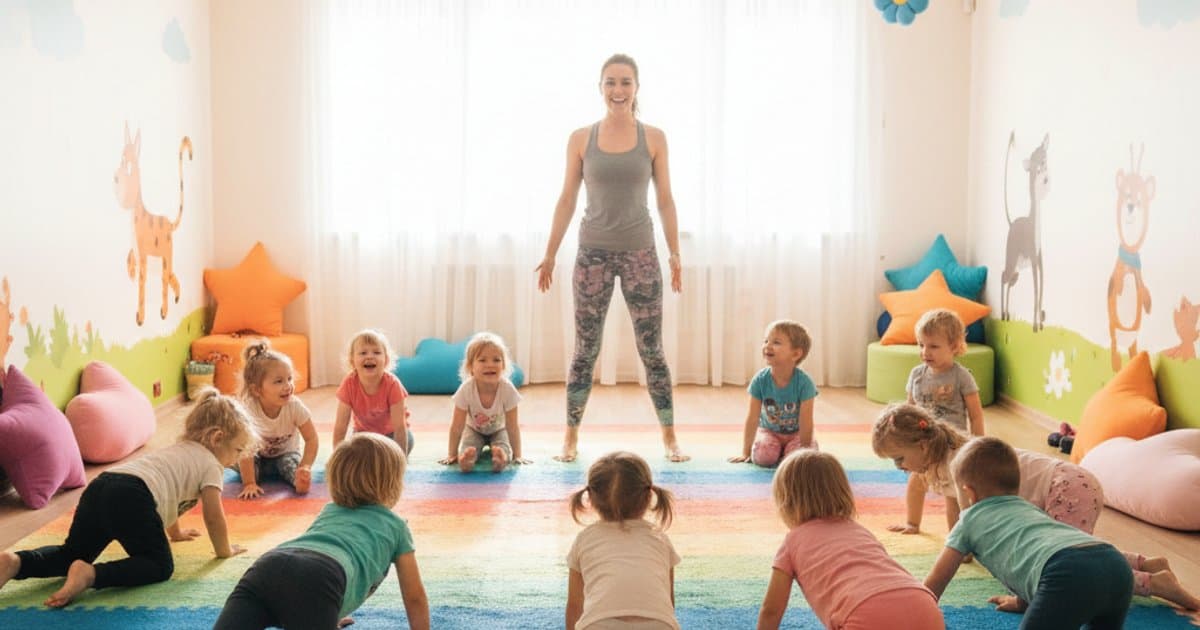
Duration: 30 to 40 minutes. Format: Parent-and-child sessions. Approach: Entirely play-based. Animal poses with sound effects, nursery rhyme movements, simple breathing activities (blow out the candles, smell the flowers), and a short relaxation with cuddling. Parents participate fully.
Young Children (ages 4 to 7)
Duration: 45 minutes. Approach: Story-based yoga is king here. Create a narrative (We're going on a jungle adventure!) and weave poses into the story (Now we're crossing a bridge — Warrior III! Look, a cobra — Cobra pose!). Include games, partner poses, and a 5-minute guided relaxation at the end. Keep transitions quick and energy levels varied throughout.
Juniors (ages 7 to 11)
Duration: 60 minutes. Approach: More structured sequences with named poses, introduction to breathing techniques (belly breathing, square breathing), partner and group challenges, and a longer relaxation/visualisation (7 to 10 minutes). Children at this age can understand the concept of mindfulness and begin to develop a personal practice.
Tweens and Teens (ages 11 to 16)
Duration: 60 to 75 minutes. Approach: Closer to an adult class but adapted for developing bodies and the specific pressures of adolescence. Include dynamic flows, strength-building poses, stress management techniques, and discussion about how yoga applies to their lives (exam stress, sleep, body confidence). This age group responds well to playlists and a more relaxed, conversational teaching style.
Mindfulness Integration
Mindfulness is increasingly what differentiates a children's yoga class from any other physical activity. Parents are specifically seeking out mindfulness skills for their children.
Age-Appropriate Mindfulness Techniques
- Breathing exercises: Balloon breath (inflate your hands as you breathe in), hot chocolate breath (breathe in the smell, blow to cool it), finger breathing (trace your hand while breathing). Start simple and build complexity with age.
- Body scans: Guide children to notice sensations in different parts of their body. For younger children, use a story (a warm sunbeam is moving up from your toes). For older children, use more traditional body scan language.
- Gratitude practice: A closing circle where each child shares one thing they are grateful for. Simple, powerful, and builds emotional vocabulary.
- Sensory awareness: Activities that draw attention to sounds, textures, and sights in the moment. What can you hear right now? What does the floor feel like under your feet?
These skills have genuine value beyond the yoga class. Schools are actively looking for providers who can teach mindfulness techniques that children carry into their daily lives.
Working with Schools
Schools represent one of the most significant revenue opportunities for a children's yoga teacher.
How to Approach Schools
- PE and Sport Premium: Primary schools in England receive approximately £16,000 to £17,000 per year specifically for PE and sport improvement. Yoga is an eligible use of this funding, particularly when positioned as supporting mental health and wellbeing. This is your strongest selling point.
- PSHE and wellbeing curriculum: Yoga and mindfulness support the PSHE curriculum, particularly around emotional regulation, self-awareness, and healthy lifestyles. Frame your offer in terms the school values.
- Pricing for schools: Schools typically pay £40 to £80 per session (30 to 60 minutes with a class of 25 to 30 children). Some schools book a full day (4 to 6 sessions) for £200 to £400.
Building School Relationships
Offer a free taster session. Schools are cautious about spending their premium, and a demonstration removes the risk. Follow up with a clear proposal document showing how your programme maps to curriculum objectives. AMES can help you manage scheduling and invoicing across multiple school contracts efficiently.
Insurance and Professional Membership
Insurance is straightforward for children's yoga if you go through the right channels.
- British Wheel of Yoga membership: £67 per year. Includes public liability insurance for teaching up to 30 participants per class. This is the simplest and most cost-effective route.
- Yoga Alliance Professionals membership: From £65 per year. Also includes insurance options.
- Standalone insurance: If you prefer an independent policy, providers like BGI Insurance and SportsCover Direct offer yoga teaching insurance from £60 to £150 per year.
Ensure your policy specifically covers working with children and includes public liability of at least £5 million.
Key Takeaways and Next Steps
- Invest in specialist training. Adult yoga teaching skills do not transfer directly to children. Complete a recognised children's yoga teacher training (80+ hours) from a provider like Rainbow Kids or a Yoga Alliance-accredited programme.
- Join the British Wheel of Yoga. For £67 per year you get professional credibility, insurance, and CPD access.
- Start with minimal equipment. £200 to £450 equips you completely. Ask children to bring their own mats to reduce costs further.
- Target schools. The PE and Sport Premium is a dedicated funding stream that schools must spend. Position yoga as supporting mental health and wellbeing outcomes.
- Structure classes by age. Story-based for under-7s, structured sequences for 7 to 11s, and a more mature approach for teens. Never try to teach all ages the same way.
- Integrate mindfulness throughout. It is your competitive advantage and what parents are specifically seeking. Build breathing and awareness exercises into every class.
- Build multiple revenue streams. Community classes, school sessions, nursery visits, holiday workshops, and private parties create a sustainable business.