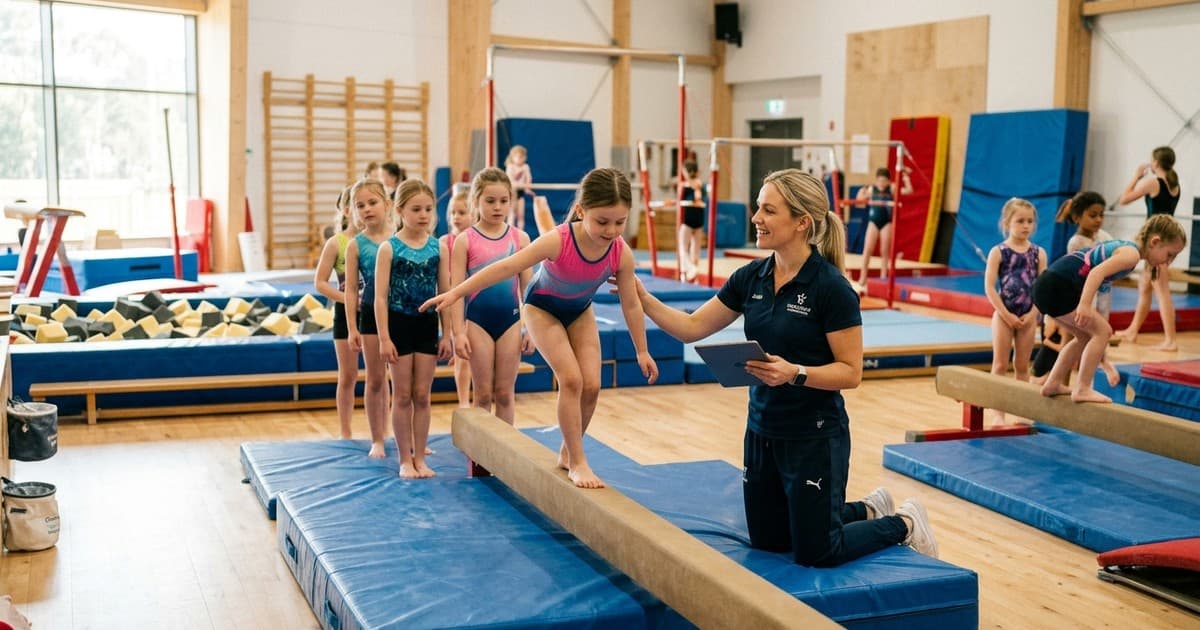
Moving Beyond Informal Group Management
In small gymnastics clubs, ability group management often starts informally. A coach knows every gymnast personally, makes placement decisions based on experience, and moves children between groups through casual conversations with colleagues and parents. This works when you have 30 gymnasts. It falls apart completely when you have 300.
As a club grows, informal management creates inconsistency, disputes, and bottlenecks. Different coaches apply different standards. Parents receive conflicting messages. Gymnasts stagnate in groups they have outgrown because nobody has formally reviewed their progress. The club becomes reactive, dealing with complaints instead of proactively managing progression.
A structured ability group management system solves these problems by creating clear criteria, transparent processes, and automated workflows. It takes more effort to set up initially, but the operational savings and the improvement in parent satisfaction pay for themselves within a single term.
Building a Criteria Framework
The criteria framework is the backbone of your system. It defines what a gymnast must demonstrate to be in each group and what they must achieve to progress to the next.
Skills-Based Criteria
Each ability group should have a defined set of entry skills and exit skills. Entry skills are the minimum competencies a gymnast needs to participate safely and productively in the group. Exit skills are the competencies that indicate readiness to move up. These should be mapped across all four apparatus areas (floor, vault, beam, and bars for women's artistic; floor, pommel, rings, vault, parallel bars, and high bar for men's artistic) plus conditioning benchmarks.
Align your criteria with the British Gymnastics Proficiency Award levels where possible. For example, your Level 2 recreational group might require all Badge 2 skills as entry criteria and all Badge 3 skills as exit criteria. This gives parents a nationally recognised reference point and simplifies communication about what "Level 2" means in your club.
Conditioning Benchmarks
Skills alone do not determine readiness. A gymnast might be able to perform a cartwheel on the floor but lack the upper body strength to progress safely on bars. Include conditioning benchmarks in your criteria: handstand hold duration, rope climb ability, number of chin-ups or pull-ups, flexibility measures (bridge, splits), and core strength indicators (dish hold, arch hold durations). British Gymnastics publishes conditioning guidelines by age and level that provide a useful starting reference.
Behavioural and Attendance Criteria
Consider including non-skill criteria for group progression. Consistent attendance matters because a gymnast who attends 50 percent of sessions cannot safely maintain the conditioning needed for more advanced skills. Behavioural expectations such as listening to instructions, following safety rules, and working cooperatively also affect whether a gymnast is ready for a more demanding group environment. These criteria must be applied consistently and documented to avoid any perception of unfairness.
Video-Based Assessment
Video assessment is one of the most valuable tools available to gymnastics clubs, and it is underused by most.
Why Video Works
Gymnastics skills happen fast. A coach watching a gymnast perform a back walkover in real time might miss subtle technical details, particularly when they are supervising a group of eight to twelve gymnasts simultaneously. Video allows repeated review, slow-motion analysis, and comparison with previous attempts. It provides objective evidence that supports placement decisions and removes the "I thought it looked fine" versus "I don't think it was clean enough" debates between coaches.
Practical Video Assessment Process
Designate one session per half-term as an assessment session. During this session, each gymnast performs the key skills for their current level and the entry skills for the next level while being recorded. A tablet on a simple tripod at each station is sufficient. After the session, the lead coach for each group reviews the footage and compares performances against the documented criteria. This review can happen asynchronously, which means it does not require multiple coaches to be in the same place at the same time.
Sharing Video with Parents
With appropriate consent, sharing assessment videos with parents is a powerful communication tool. A parent who can see their child's cartwheel next to a reference video of the standard expected at the next level understands instantly why the child has not yet been moved up. It transforms a potentially confrontational conversation into a collaborative one. Digital platforms like AMES allow secure video sharing within the parent portal, keeping footage private and consent-compliant.
Trial Session Workflows
When a gymnast meets the criteria for promotion, a trial session in the new group is the safest and most transparent way to confirm the move.
Structuring Trial Sessions
A trial session should be a normal session in the higher group, not a special assessment. The gymnast participates fully, and the receiving coach evaluates whether they can keep up with the group's pace, follow instructions at the expected level, and work safely on the apparatus at the group's configurations. One trial session is usually sufficient for clear-cut promotions. For borderline cases, offer two or three trial sessions across consecutive weeks.
What Coaches Should Evaluate
During the trial, the receiving coach should assess: Can the gymnast perform the group's warm-up and conditioning safely? Can they queue and rotate between apparatus without excessive prompting? Are they physically able to use the apparatus at the heights and configurations used by the group? Do they understand and follow the safety rules for the apparatus in use? Can they attempt the skills being taught with reasonable form, even if imperfect?
Communicating Trial Outcomes
Whether the outcome is a promotion or a return to the original group, communicate the decision clearly and quickly. A successful trial should result in notification within 48 hours, with details of the new group's timetable and any fee changes. An unsuccessful trial should include specific feedback about what the gymnast needs to develop, and a realistic timeline for when they might be reassessed. Never leave families waiting days for a decision; it creates unnecessary anxiety.
Automated Promotion Notifications
Manual promotion processes create delays and inconsistencies. A gymnast achieves the exit criteria for their group, but the coach forgets to submit the paperwork. Or the administrator processes the move but does not notify the parent until days later. Or the parent is told their child is moving up but is not given the new session time, and the child turns up at the wrong class.
Building an Automated Workflow
A digital management system can automate much of this process. When a coach marks the final exit skill as achieved, the system triggers a notification to the programme coordinator. The coordinator reviews and approves the promotion. The system then sends the parent an automated email or app notification containing: confirmation of the promotion, the new group name and level, the session day, time, and location, any fee changes (with the effective date), what to expect in the new group, and a contact point for questions.
Managing Capacity
Automated promotion workflows must account for group capacity. There is no point promoting a gymnast into a group that is already full. The system should check available spaces before triggering the promotion notification. If the target group is full, the gymnast should be placed on a priority waiting list and notified as soon as a space opens. AMES handles this capacity management automatically, preventing over-booking and ensuring promotions only happen when there is actually a space available.
A structured ability group system does not remove coaching judgment. It supports it with evidence, consistency, and transparency that parents and gymnasts can trust.
Key Takeaways
- Define entry and exit skills for every ability group across all apparatus areas plus conditioning benchmarks.
- Align criteria with British Gymnastics Proficiency Award levels for nationally recognised reference points.
- Use video assessment at least once per half-term to create objective evidence for placement decisions.
- Require trial sessions in the new group before confirming promotions, with clear evaluation criteria for the receiving coach.
- Automate promotion notifications so parents receive timely, complete information about group changes and fee adjustments.
- Build capacity checks into the promotion workflow to prevent over-booking groups.