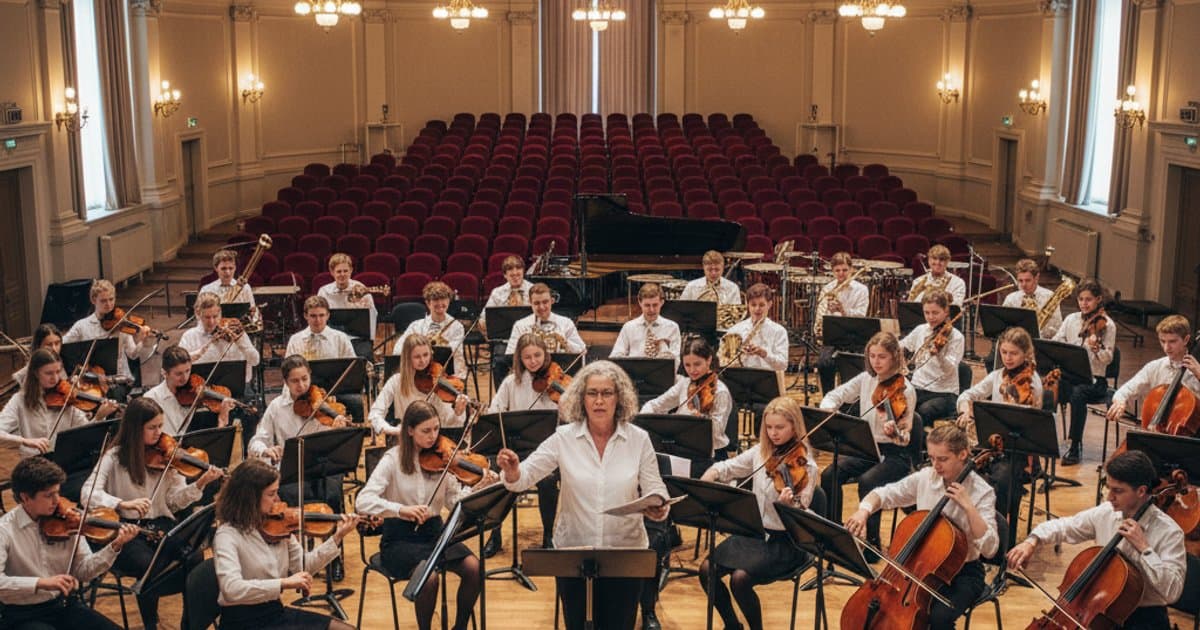
Concerts Are Your Shop Window
A well-run concert does more for your music school's reputation than any amount of marketing. Parents invite grandparents, neighbours, and friends. They share videos on social media. They talk about it at the school gate. A single annual concert can generate more word-of-mouth referrals than months of paid advertising. Conversely, a disorganised concert, where the running order overruns, the sound system feeds back, and nobody can find the programme, damages your professional image in a way that is hard to repair.
Music school concerts also serve a crucial educational purpose. Performing in front of an audience develops confidence, stage presence, and the ability to manage nerves. These are skills that benefit pupils far beyond their musical education. For exam candidates, concert performances are invaluable rehearsal for the pressure of an exam room.
This guide covers the practical elements of planning and delivering concerts that run smoothly, sound professional, and leave families wanting to come back.
Order of Performance and Programme Design
The running order is the skeleton of your concert. Get it right and the event flows naturally. Get it wrong and the audience fidgets, the backstage area descends into chaos, and the whole event feels longer than it is.
Principles of Running Order
Start with a confident performer. The opening act sets the tone for the entire concert. Choose a pupil who is reliable, well-prepared, and unlikely to be derailed by nerves. This does not have to be your most advanced player. A Grade 3 pupil playing a lively piece with confidence is a better opener than a Grade 7 pupil playing a slow, technically demanding work.
Vary instrument and style throughout. Three pianists in a row, regardless of how well they play, tests the audience's attention. Alternate between instruments, and where possible between styles and periods. A Baroque harpsichord piece followed by a jazz saxophone solo followed by a classical violin sonata movement keeps the programme feeling fresh.
Build towards the interval and the finale. Place your strongest ensemble or most advanced soloist just before the interval and at the end of the concert. This gives the audience something to look forward to and ensures the event ends on a high point.
Timing and Pacing
Estimate the total running time carefully. Each performance slot includes the piece itself, the walk to and from the stage, any instrument setup or adjustment, and applause. A three-minute piece typically needs a five-minute slot. A concert of 20 performers at five minutes each is 100 minutes before you add an interval, any welcome or closing remarks, and ensemble items. Most audiences, particularly those with younger children, have a tolerance of about 90 minutes including an interval. Plan accordingly and be willing to trim the programme if the numbers do not work.
An audience that leaves wishing there had been one more piece is far better than an audience that spent the last 20 minutes checking their phones.
Accompanist Coordination
Many pieces performed in exams and concerts require piano accompaniment. Coordinating accompanists is one of the most time-consuming aspects of concert preparation.
Booking and Availability
Professional accompanists in the UK typically charge £30 to £60 per hour for rehearsal time and £80 to £200 for a concert performance, depending on the length and complexity of the programme. For a school concert with 15 accompanied pieces, the accompanist cost alone might be £200 to £400 including rehearsal time. Book your accompanist as early as possible, ideally at the start of term, because experienced accompanists are in high demand during exam and concert seasons.
Rehearsal Scheduling
Each accompanied pupil needs at least one rehearsal with the accompanist before the concert. For more advanced repertoire, two or three rehearsals may be necessary. Scheduling these rehearsals, typically in 15 to 20-minute slots on one or two days, requires coordination between the accompanist, the pupil, and the pupil's family. A shared scheduling system where families can book their rehearsal slot from available times reduces the admin significantly.
Music Preparation
The accompanist needs the music well in advance. At least two weeks before the first rehearsal is standard professional practice. Teachers should ensure that the correct edition is provided, that any cuts or repeats are clearly marked, and that page turns are manageable. Sending music late or in poor condition wastes rehearsal time and frustrates accompanists, which is a relationship you want to protect.
Venue Technical Requirements
Whether you are performing in your own hall, a church, a school assembly room, or a hired venue, the technical setup directly affects the quality of the event.
Sound
For acoustic instruments in a small to medium venue (up to about 150 seats), amplification is usually unnecessary and can actually degrade the sound. Acoustic projection is part of what makes live music special. For larger venues, or for instruments that do not project well (classical guitar, quiet woodwind), consider a simple amplification setup with one or two high-quality microphones and a small PA system. Avoid over-amplifying. The goal is to support the natural sound, not replace it.
Lighting
Performance lighting does not need to be theatrical. At minimum, performers should be well-lit so the audience can see them clearly, and the audience area should be slightly dimmer to create a natural focus on the stage. If the venue has adjustable lighting, a simple two-state setup, bright for the stage area and dimmed for the audience, is usually sufficient. Avoid spotlights that blind performers who are trying to read music.
Stage Layout
Plan the stage layout in advance and test it before the concert. Ensure the piano is positioned so the accompanist can see the performer. Check that music stand heights are adjustable (and that you have enough stands). Confirm that there is adequate space for larger instruments like cellos and double basses. If performers enter and exit from different sides of the stage, mark the routes clearly and rehearse the transitions.
Recording
Many families want a recording of their child's performance. A single fixed camera with a good-quality external microphone produces results that are far better than a dozen parents holding up phones. Position the camera centrally at the back of the audience area, elevated if possible, with a clear sightline to the performance area. A separate audio recorder positioned near the performers captures better sound than the camera's built-in microphone.
Programme Notes and Printed Materials
A printed programme serves three purposes: it tells the audience what to expect, it gives performers and families a keepsake, and it gives your school a professional image.
Programme Content
An effective concert programme includes the school name, logo, and concert title, the date, time, and venue, the running order with performer name, instrument, piece title, and composer for each item, brief notes about the pieces or performers (particularly for advanced items), acknowledgements (accompanist, venue, helpers), and information about your school including contact details and how to enquire about lessons.
Digital Programmes
Some schools are moving to digital programmes accessible via a QR code displayed at the venue entrance. This saves printing costs, allows last-minute changes, and can include links to recordings or further information. However, older audience members may prefer a physical programme, so a hybrid approach with a limited print run alongside a digital version often works best.
Post-Event: Recordings and Follow-Up
The concert does not end when the last note fades. Post-event follow-up reinforces the positive experience and creates marketing opportunities.
Distributing Recordings
Edit the concert recording into individual clips, one per performer, and share them with families through your parent portal. Families appreciate being able to share their child's performance with relatives who could not attend. With appropriate consent, selected clips can also be shared on your school's social media channels.
Feedback and Reflection
Ask teachers and families for brief feedback after the concert. What worked well? What could be improved? Did the running order feel balanced? Was the venue suitable? This feedback loop ensures that each concert is better than the last.
Key Takeaways
- Plan the running order carefully with a confident opener, varied instrumentation throughout, and strong items before the interval and at the end.
- Book accompanists early and provide music at least two weeks before the first rehearsal.
- Keep technical setup simple with minimal amplification for acoustic concerts and well-positioned recording equipment.
- Produce a professional programme that serves as a guide, a keepsake, and a marketing tool for your school.
- Share individual performance recordings through your parent portal, and use selected clips for social media with consent.
- Collect feedback after every concert to refine your planning for next time.