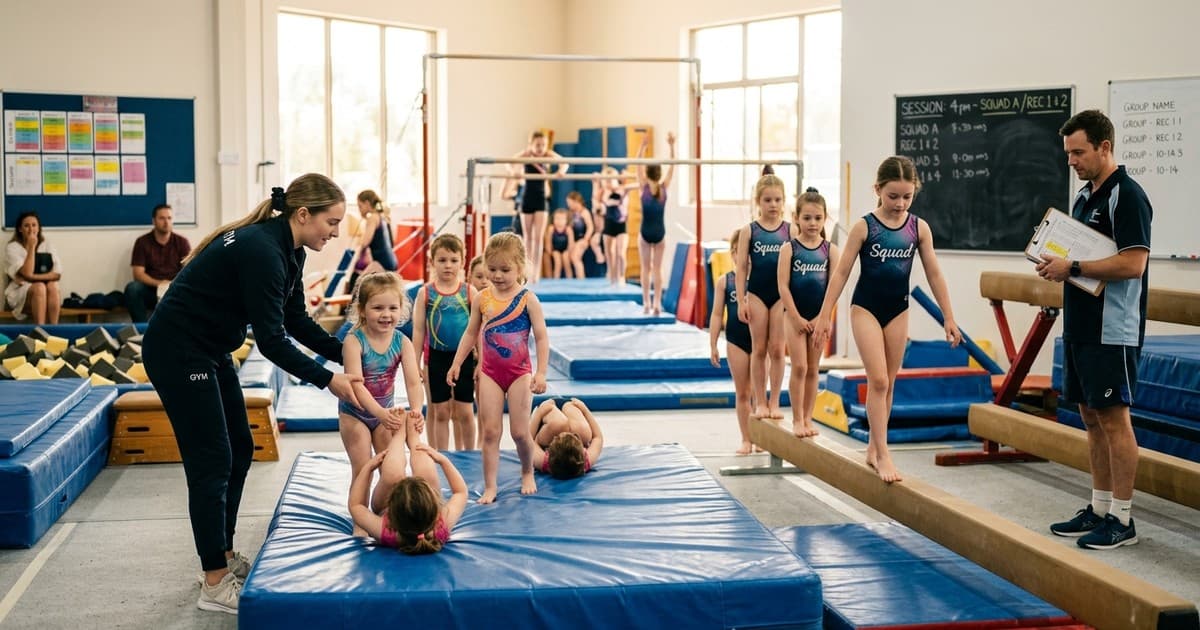
The Squad and Recreational Tension
Every gymnastics club that runs both competitive squads and recreational classes faces the same fundamental tension. Squad gymnasts need the most hours, the best coaches, and priority access to apparatus. Recreational classes serve the most families, generate the most revenue, and are the pipeline from which future squad gymnasts emerge. Neither programme can thrive without the other, but they compete for the same finite resources: facility time, coaching staff, and equipment.
Get the balance wrong in either direction and your club suffers. Over-invest in squads and your recreational programme shrinks, cutting off both revenue and talent pipeline. Over-prioritise recreational classes and your competitive gymnasts leave for clubs that give them the training hours they need. British Gymnastics guidance emphasises that clubs should offer a clear pathway from recreational participation to competitive gymnastics, but the guidance does not tell you how to make that pathway financially sustainable.
This guide does.
Scheduling Strategies That Work
The timetable is where the squad-recreational balance is won or lost. Both programmes need peak-time access to the facility, and peak time is limited.
Defining Peak and Off-Peak
For children's gymnastics, peak hours are typically weekday evenings (4pm to 7pm) and Saturday mornings (9am to 1pm). These are the times when the largest number of families are available. Off-peak is weekday mornings, early afternoons, and Sunday. The temptation is to give squads all the evening hours because they train more frequently, but this starves your recreational programme of the slots that working parents can actually attend.
A Practical Timetable Model
A model that works for many clubs is to split the evening into recreational and squad blocks. For example, 4:00pm to 5:30pm for recreational classes (catching the after-school window) and 5:30pm to 8:00pm for squad training. Saturday mornings can follow a similar pattern, with recreational classes from 9:00am to 12:00pm and squad training from 12:00pm to 3:00pm, or vice versa depending on your local demand patterns.
During school holidays, the timetable can shift significantly. Many clubs run intensive recreational camps during the day and move squad training to early morning or late afternoon. This maximises revenue during holiday periods while maintaining squad training continuity.
The Hours Equation
British Gymnastics provides recommended training hours by competitive level. A gymnast competing at Regional level typically needs 9 to 12 hours per week. At National level, 16 to 20 hours. At a high level, up to 30 or more. These hours must fit around school, and they must fit into your facility's available time. Be realistic about what levels of competition your club can genuinely support given your facility hours. It is better to have a strong Regional squad than a National squad that cannot get enough training time.
Pricing Structures and Financial Sustainability
The financial model for squad and recreational programmes is fundamentally different, and clubs that use the same pricing logic for both usually end up cross-subsidising squads from recreational revenue without realising it.
Recreational Pricing
Recreational classes typically charge per session or per term. In the UK, recreational gymnastics sessions range from eight to fifteen pounds per hour depending on location and club facilities. Termly pricing (paying for a block of sessions upfront) improves cash flow and retention. Monthly direct debit is increasingly common and provides the most predictable revenue.
Squad Pricing
Squad fees should reflect the significantly higher training hours, the smaller coach-to-gymnast ratios, and the additional costs of competition entry, travel, and specialist coaching. Most clubs charge squads on a monthly basis via direct debit. Monthly squad fees in the UK range from 80 to 250 pounds depending on the number of training hours, the competitive level, and the club's location. This typically does not include competition entry fees, leotards, or travel costs, which are charged separately.
Competition Levies
Some clubs include a termly or annual competition levy in squad fees to cover entry fees, venue hire for internal competitions, and medals or trophies. This smooths the cost for parents rather than hitting them with individual entry fees throughout the year. A typical competition levy runs between 50 and 150 pounds per year per squad gymnast.
Sibling and Multi-Programme Discounts
Families with multiple children in your club, or a child doing both recreational and squad gymnastics, should receive a discount. A typical approach is 10 to 15 percent off the second child's fees and 15 to 20 percent off the third. This rewards loyalty and reduces the likelihood of families choosing between children when budgets are tight.
Coach Allocation and Development
Your best coaches naturally gravitate towards squad work because it is more technically challenging and rewarding. However, your recreational programme needs skilled coaches too, particularly for the developmental groups from which squad gymnasts are identified.
The Coaching Pyramid
Structure your coaching team as a pyramid. Your most qualified coaches (BG Level 3 and above) lead squad training and oversee the recreational programme's curriculum. Your Level 2 coaches deliver the bulk of recreational sessions with support from Level 1 assistants and volunteers. This ensures quality across both programmes while keeping your wage bill sustainable.
Talent Identification
Recreational coaches need clear criteria for identifying gymnasts who might be suited to squad development. Physical attributes (strength, flexibility, spatial awareness, low fear response), work ethic, and coachability are all indicators. Create a simple referral process where recreational coaches can flag potential squad gymnasts for assessment by squad coaches. This keeps the pipeline flowing and gives recreational coaches a sense of contributing to the club's competitive success.
Facility Sharing and Apparatus Management
When squads and recreational classes share apparatus, conflicts arise. Squad gymnasts need equipment set to competition specifications. Recreational classes need equipment at heights and configurations appropriate for less experienced gymnasts.
Dedicated Setup Zones
Where your facility allows, create zones that remain at squad specification (full-height bars, competition-height beam) and zones that are set for recreational use (low bars, low beam, developmental floor area). This reduces changeover time between sessions and ensures both programmes have consistent access to appropriate equipment.
Shared Equipment Protocols
Where equipment must be shared, establish clear protocols for who adjusts it, when, and how it is left at the end of each session. A squad that finishes training and leaves the bars at full height creates a safety hazard if the next session is a recreational class for six-year-olds. Ending protocols should be documented and enforced.
The best gymnastics clubs do not see squad and recreational as competing programmes. They see them as two halves of the same ecosystem, each making the other stronger.
Key Takeaways
- Split peak evening and Saturday hours between recreational and squad programmes rather than giving all prime time to one programme.
- Price squad and recreational programmes using different models that reflect their different cost structures and value propositions.
- Include competition levies in monthly squad fees to smooth costs for parents and simplify administration.
- Structure coaching teams as a pyramid with your most qualified coaches overseeing both programmes.
- Create a clear talent identification and referral process from recreational to squad pathways.
- Establish documented equipment protocols for shared apparatus to prevent safety hazards between sessions.