The Physical Assets That Make or Break a Music School
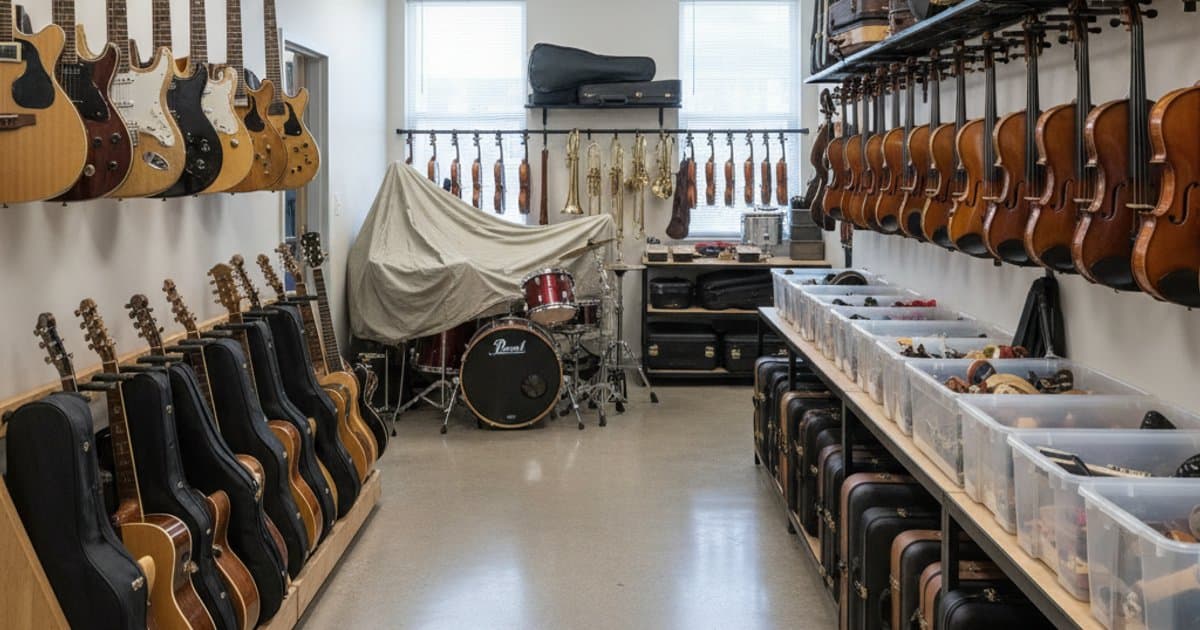
Every music school depends on two categories of physical assets: the rooms where teaching happens, and the instruments that pupils play. Poor management of either one creates problems that ripple through the entire operation. A room that is too reverberant for a quiet flute lesson, a violin with a cracked bridge that should have been serviced months ago, or an instrument hire fleet where three cellos have gone missing without anyone noticing: these are the kinds of issues that erode quality, frustrate teachers, and damage your reputation with families.
Most music schools start small, with a handful of rooms and a modest instrument collection, and management is informal. But as the school grows, informal systems break down. This guide covers how to manage rooms and instruments systematically, whether you have 5 teaching spaces or 50, and whether your hire fleet is 20 instruments or 200.
Room Management and Acoustic Matching
Not all rooms are equal, and not all rooms suit all instruments. A small room with hard surfaces and no acoustic treatment can be painfully loud for a drum kit lesson but perfectly adequate for a quiet classical guitar tutorial. A large, reverberant hall might be ideal for choir rehearsals but entirely wrong for a one-to-one piano lesson where the teacher needs to hear subtle tonal differences.
Room Profiles
Every teaching room should have a documented profile that includes dimensions and floor area, acoustic characteristics (soft furnishings, carpet or hard floor, ceiling height, sound insulation rating), fixed equipment (piano, keyboard, music stands, chairs), suitability by instrument type and group size, and any access restrictions or shared-use arrangements.
This profile allows you to match lessons to rooms intelligently rather than simply allocating the next available space. When a new saxophone teacher joins your team, you can immediately identify which rooms are suitable rather than discovering through complaints that the room allocated is shared with a nursery next door.
Soundproofing Considerations
Sound bleed between rooms is one of the most common complaints in music schools. A trumpet lesson next to a Grade 1 piano lesson makes both experiences worse. The gold standard is purpose-built, acoustically isolated rooms, but most music schools operate in converted or shared spaces where full soundproofing is not practical.
Practical measures include scheduling loud instruments (brass, drums, voice at higher grades) away from quiet instruments (classical guitar, early-stage woodwind) both in terms of room allocation and time. Heavy curtains, acoustic panels, and draft excluders around doors all help. Where budget allows, secondary glazing on internal windows and acoustic door seals make a significant difference for relatively modest cost.
Room Booking and Utilisation
Rooms are expensive, whether you own or rent them. Tracking utilisation helps you understand which rooms are under-used and which are bottlenecks. A room that sits empty every Wednesday afternoon might be suitable for group theory classes or ensemble rehearsals. A room that is overbooked every Saturday morning might justify investment in additional space.
Instrument Hire Fleet Management
Many music schools operate instrument hire schemes, allowing families to rent an instrument while their child establishes whether they want to continue. This is a valuable service that reduces the barrier to starting lessons, but it creates a significant asset management challenge.
Fleet Tracking
Every instrument in your hire fleet needs to be tracked individually. This means assigning a unique identifier (asset number or barcode) to each instrument, recording its make, model, size (particularly important for strings, where children progress through fractional sizes), current condition, current location (in stock, on hire, at repair, or written off), hire history, and maintenance record.
Without this tracking, instruments go missing. It sounds dramatic, but it is remarkably common. A family moves away and forgets to return the viola. A school-site instrument is left in a cupboard after the peripatetic teacher's contract ends. A damaged flute is put aside for repair and forgotten. Over time, these losses add up to thousands of pounds.
Hire Agreements
Every hire should be covered by a written agreement that specifies the instrument (by asset number), the hire fee and payment terms, the family's responsibility for care and insurance, the process for returning or upgrading the instrument, and what happens if the instrument is lost or damaged. A clear agreement, signed by the parent, protects both parties and sets expectations from the start.
Size Upgrades for String Instruments
Young string players regularly need to move up a size. A child who started on a quarter-size violin at age six might need a half-size by age eight and a three-quarter by age ten. Your hire fleet needs sufficient stock at each size to accommodate these transitions, and your tracking system needs to manage the swap smoothly, returning the smaller instrument to stock and issuing the larger one without gaps in the child's practice.
Insurance and Maintenance
Musical instruments are valuable and fragile. A decent student cello costs £500 to £1,500, and even a basic student trumpet is £200 to £400. Your hire fleet represents a significant capital investment that needs protecting.
Insurance Options
You have two main options: insure the fleet yourself under a business policy, or require families to insure their hired instrument. Many schools use a combination, maintaining a blanket policy for instruments on their premises and requiring families to add hired instruments to their home contents insurance or take out a specialist instrument policy. Providers such as Allianz Musical Insurance and Newmoon Insurance offer policies specifically designed for instrument hire schemes.
An uninsured hire fleet is a risk you cannot afford. One stolen cello or one water-damaged piano could cost more than a year's insurance premium.
Maintenance Schedules
Regular maintenance extends instrument life and ensures pupils are always playing instruments in good working order. A basic maintenance schedule includes string instruments restrung and checked every 6 to 12 months, woodwind instruments serviced (pads, springs, corks) annually, brass instruments cleaned and valves checked every 6 months, pianos tuned at least twice per year (more if they are used heavily or in rooms with temperature fluctuations), and all instruments visually inspected at the start of each term.
Build relationships with local repairers. A good instrument technician is worth their weight in gold, and many offer discounted rates for schools that provide regular work.
Inventory Management in Practice
Whether you use a dedicated asset management system, a module within your school management software, or a well-structured spreadsheet, the principles of inventory management are the same. Record every instrument when it enters your fleet. Update its status whenever it moves: from stock to hire, from hire to repair, from repair back to stock. Conduct a physical audit at least once per term, comparing your records against actual instruments on site. Flag instruments that are overdue for return or maintenance. Report on fleet utilisation, identifying instruments that are never hired (and might be better sold) and sizes or types where demand exceeds supply.
The goal is to know exactly what you have, where it is, and what condition it is in at any point in time. This is not bureaucracy for its own sake. It is the foundation of a hire service that works reliably for families and protects your investment as a school.
Key Takeaways
- Profile every room for acoustics, equipment, and instrument suitability before allocating lessons.
- Schedule by sound level to prevent loud and quiet instruments clashing in adjacent rooms.
- Track every hire instrument individually with a unique asset number, condition record, and maintenance history.
- Use written hire agreements that clearly state fees, responsibilities, and damage or loss procedures.
- Insure your fleet and require families to cover hired instruments outside your premises.
- Schedule regular maintenance and build relationships with local instrument technicians.
- Audit physically each term to catch missing instruments before they become permanent losses.