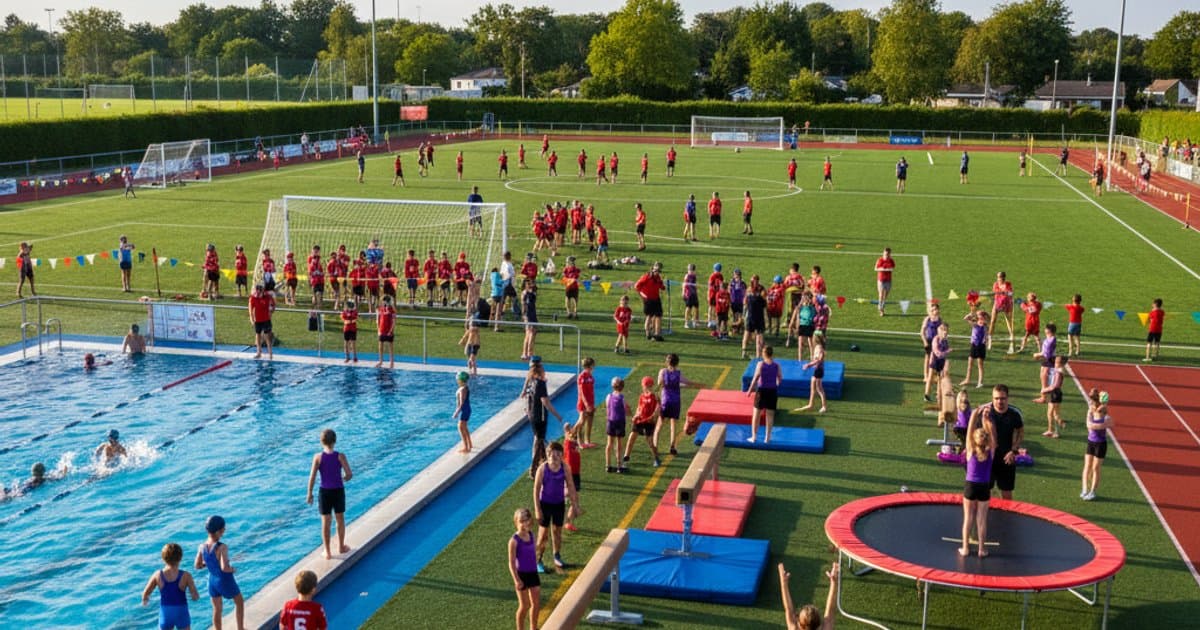
Why Multi-Sport Scheduling Is Harder Than It Looks
Running a single-sport club is straightforward by comparison. You have one venue, one discipline, and a predictable flow. Multi-sport holiday camps are a different beast entirely. On any given day you might have football on the main pitch, cricket in the nets, arts and crafts in the hall, swimming at the local pool, and archery on the back field, all with different group sizes, different staff requirements, and different equipment needs.
The schedule is the backbone of your camp. When it works, parents see a polished operation and children have a brilliant time. When it falls apart, you get bottlenecks at transitions, children standing around waiting, and staff firefighting instead of coaching. The difference between the two outcomes is rarely luck. It is planning, contingency, and the right systems.
This guide walks through the main sources of scheduling complexity and how experienced operators manage them without losing their minds.
Activity Rotation and Group Flow
Most multi-sport camps run on a rotation model: groups of children cycle through activity stations throughout the day. The maths sounds simple, but it gets complicated quickly once you factor in travel time between venues, equipment changeovers, and age-appropriate session lengths.
Designing Your Rotation Grid
Start by mapping every activity to a venue and a time slot. A typical day might run from 08:30 (early drop-off) to 17:30 (late collection), with structured activity blocks from 09:30 to 15:30. That gives you roughly six hours of programming, which most operators split into four or five rotation slots with breaks and lunch in between.
The critical constraint is venue capacity. If your sports hall holds 30 children safely but you have 90 on site, you need at least three activity stations running simultaneously. Each group moves to the next station after each slot. The rotation grid must ensure no two groups arrive at the same venue at the same time.
- Buffer time between rotations: Build in 10 to 15 minutes for transitions. Children need to collect water bottles, visit the toilet, and walk to the next venue. Cutting this short creates a cascade of late starts.
- Age-appropriate session lengths: Under-6s need shorter sessions (30 to 40 minutes) with more breaks. Over-8s can sustain 45 to 60 minutes of focused activity. Your rotation grid may need different timings for different age groups.
- Equipment changeovers: If the hall switches from gymnastics to dodgeball, someone needs 10 minutes to clear mats and set up. Factor this into the schedule, not as an afterthought.
Managing Uneven Group Sizes
Bookings rarely divide evenly into neat groups. You might have 40 children aged 5 to 7 and only 18 aged 8 to 11. Rather than running identical rotations, experienced operators create flexible groupings. Some activities work well with mixed ages and larger numbers (team games, obstacle courses), while others need smaller, age-matched groups (archery, swimming).
The key is to identify which activities are elastic and which are fixed, then build your rotation around the fixed constraints first.
Room Allocation and Venue Logistics
Multi-sport camps often operate across multiple spaces: indoor halls, outdoor pitches, swimming pools (on-site or off-site), classrooms for craft activities, and sometimes external facilities booked by the hour. Managing these spaces is a scheduling challenge in its own right.
On-Site vs Off-Site Venues
If you are using a school site during the holidays, you may have access to the sports hall, playground, field, and one or two classrooms. But the school may restrict access to certain areas. Agree in writing exactly which spaces are available, at what times, and who holds the keys.
Off-site venues such as swimming pools or climbing walls add transport logistics. A minibus run to the pool takes 15 minutes each way, plus 10 minutes for changing. A one-hour pool booking actually consumes nearly two hours of your schedule. Build this into the rotation grid honestly rather than hoping children will move faster than they do.
Shared Space Conflicts
If you are hiring a leisure centre or community facility, you may be sharing space with other users. The five-a-side pitch might be booked by an adult league at 13:00, which means your afternoon football session needs to start earlier or move to the field. Map every external constraint before the camp starts and build your grid around them.
Wet Weather Contingencies
In the UK, rain is not an occasional inconvenience. It is a scheduling certainty. Any camp that relies entirely on outdoor activities without a wet weather plan will have at least one day per week where the schedule collapses.
The Parallel Schedule Approach
The most effective approach is to maintain two versions of your daily schedule: fair weather and wet weather. The wet weather version replaces outdoor activities with indoor alternatives that use the same time slots and staff. Football becomes indoor football or team games. Cricket becomes indoor batting practice or a cricket-themed quiz. The more closely the wet weather alternative mirrors the original, the less disruption children experience.
- Decision time: Set a specific time (usually 08:00) when you commit to the fair or wet weather schedule. Trying to switch mid-morning creates confusion for staff and children.
- Indoor capacity limits: Your sports hall has a maximum safe occupancy. If the wet weather plan brings everyone indoors, you may exceed it. Plan staggered indoor activities, with some groups doing craft or film time while others use the hall.
- Equipment readiness: Wet weather equipment (parachute games, indoor sports sets, craft supplies) should be stored separately and ready to deploy without hunting through cupboards at 08:15.
Specialist Coach Availability
Many multi-sport camps bring in specialist coaches for activities like archery, fencing, martial arts, or climbing. These coaches are often freelance and may work across several camps during the holiday period.
Booking and Backup Planning
Confirm specialist bookings in writing at least four weeks before camp starts, with clear cancellation terms on both sides. If your archery coach cancels on Tuesday morning, you need a backup plan that does not leave 20 children with nothing to do for an hour.
Practical backup strategies include training your core staff in a simplified version of each specialist activity, maintaining a pool of substitute activities that any qualified member of your team can run, and keeping a list of alternative freelance coaches who can step in at short notice. The best operators also cross-train their permanent staff, so at least two people on site can credibly deliver each activity on the programme.
Coordinating Arrival and Setup Times
Specialist coaches often bring their own equipment. Archery targets need 20 minutes to set up. Climbing walls need a safety inspection. Build setup and pack-down time into the schedule and give specialists a clear arrival time that accounts for this. If the archery slot starts at 10:00, the coach needs to be on site by 09:30 at the latest.
The best camp schedules look effortless to parents and children. Behind the scenes, they are the product of detailed planning, honest contingency thinking, and systems that make last-minute changes manageable rather than chaotic.
Key Takeaways
- Build rotation grids around fixed constraints first (venue capacity, off-site transport, specialist availability), then fill in the flexible slots.
- Always include 10 to 15 minutes of buffer time between rotations for transitions, equipment changeovers, and toilet breaks.
- Maintain a complete wet weather schedule that mirrors the fair weather version as closely as possible, with a clear daily decision point.
- Confirm specialist coaches in writing and have backup plans for every specialist activity on the programme.
- Use scheduling software that lets you visualise the entire day across all venues and groups, so conflicts are visible before they happen rather than when 30 children arrive at an already-occupied pitch.