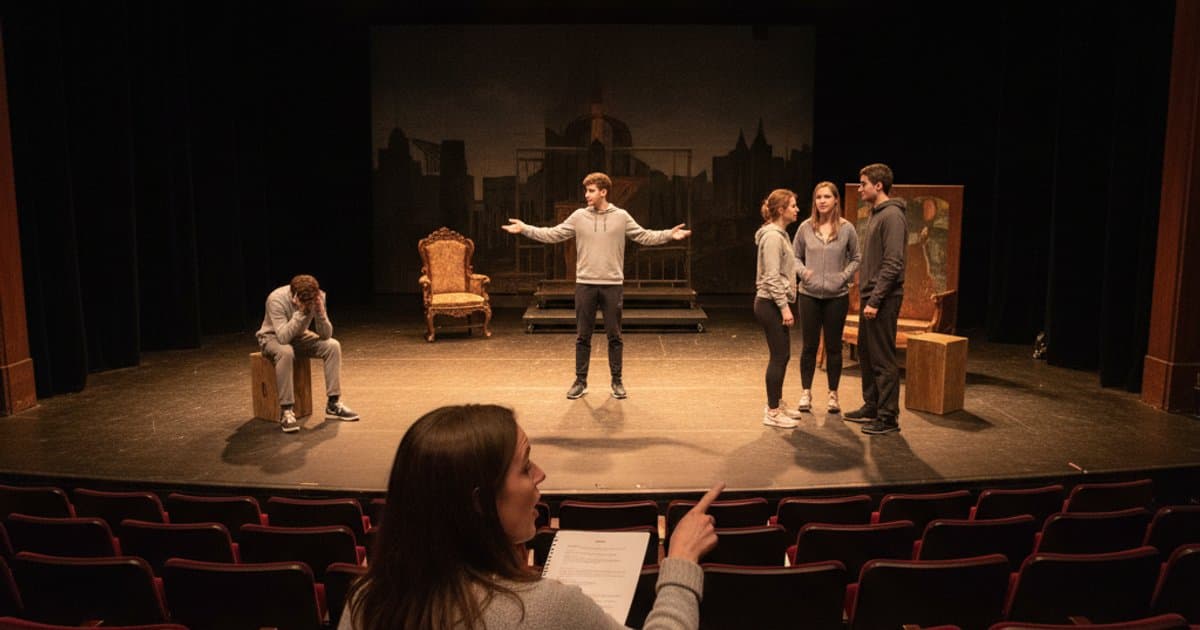
The Dual Timetable Problem
Most drama schools operate two overlapping schedules. The first is your regular weekly timetable: age-banded classes in acting, musical theatre, dance, and perhaps LAMDA preparation, running term by term on a predictable cycle. The second is your production rehearsal schedule, which is irregular, intensive, and involves constantly shifting combinations of cast members depending on which scenes are being rehearsed.
These two schedules frequently collide. A student in your Saturday morning acting class is also in the production, which needs an extra rehearsal on Saturday afternoon. A teacher running Wednesday evening classes is also directing the show, which needs technical rehearsals on a Wednesday. A parent who has carefully organised their week around fixed class times is now being asked to accommodate additional pick-ups and drop-offs on different days.
Getting this right requires deliberate planning, clear communication, and a scheduling approach that respects everyone's time. Getting it wrong leads to exhausted students, frustrated parents, and overworked staff.
Scene-by-Scene Rehearsal Planning
The fundamental principle of efficient drama school scheduling is this: never have anyone in the building who is not actively needed. This means planning rehearsals by scene, not by act, and calling only the cast members required for each scene.
Creating the Rehearsal Breakdown
Once you have selected your production, create a scene-by-scene breakdown that lists:
- Every scene or musical number in the show
- Which cast members appear in each scene
- The estimated rehearsal time needed for each scene (a rough guide: 15 to 30 minutes per page of script for initial blocking, reducing to 5 to 10 minutes per page for polishing runs)
- Any technical requirements (props, set pieces, sound cues) that need to be introduced during rehearsal
- Dependencies (scenes that must be rehearsed before others because of character arcs or staging that carries through)
This breakdown becomes the foundation of every rehearsal call you issue. It takes time to create but saves vastly more time over the rehearsal period by eliminating wasted sessions where half the cast is sitting idle.
Grouping Scenes Efficiently
Group scenes for rehearsal based on cast overlap, not chronological order. If scenes 2, 5, and 9 all involve the same group of students, rehearse them in the same session even though they are spread across the show. This minimises the number of rehearsal calls each student receives and allows parents to plan more predictable schedules.
Create colour-coded cast groups to simplify communication. For example: Group A (leads), Group B (supporting), Group C (ensemble), Group D (dancers). A rehearsal call might then read: "Saturday 2pm to 4pm: Groups A and C, scenes 3, 7, and 11." Parents can quickly identify whether their child is needed without reading through every scene description.
The director who rehearses every scene in order with the full cast present is wasting 60% of the room's time. Scene-based scheduling is not a luxury; it is a professional obligation to your families.
Cast Call Sheets
A cast call sheet is the document that tells each student and their parents exactly when they are needed. It should be issued at least two weeks in advance and updated if changes occur.
What to Include
- Date and time: Exact start and finish times for each student, not just the session time.
- Location: Room name or number, particularly if you use multiple spaces.
- What to bring: Rehearsal clothes, character shoes, specific props, script, pencil.
- What will be rehearsed: Scene numbers and a brief description so students can prepare.
- Pick-up time: When parents should collect. This must be specific. "Approximately 4pm" is not good enough for a parent planning their afternoon.
Distributing Call Sheets
Distribute call sheets digitally through your booking or management platform, email, or a dedicated parent WhatsApp group. Avoid relying on children to pass paper call sheets to their parents. A management system like AMES can automate call sheet distribution and send reminders to relevant families before each rehearsal, significantly reducing no-shows from families who simply forgot.
Always request a confirmation of receipt. A read receipt, a reply, or a tick on a digital form. If a family has not confirmed they have seen the call sheet, follow up. An unread call sheet is the most common cause of missed rehearsals.
Layering Rehearsals Over Regular Classes
Your production rehearsal schedule must coexist with your regular class timetable. There are several approaches, and most drama schools use a combination.
Option 1: Dedicated Rehearsal Slots
Add rehearsal-specific sessions to the timetable during the production period. Typically, this means an additional weekend session (Sunday morning is popular) or a weekday evening slot. The advantage is that regular classes are unaffected. The disadvantage is that you need additional venue access and staff availability, and you are asking families for more of their time.
Option 2: Replace Regular Classes
During the final four to six weeks before a production, convert regular class time into rehearsal time. Students in the show rehearse during their normal session; students not in the show continue with modified classes led by another teacher. This keeps the time commitment constant for families but requires additional teaching staff to cover non-production classes.
Option 3: Extended Regular Sessions
Extend existing sessions by 30 to 60 minutes during production period. A 90-minute Saturday class becomes a 2-hour session with the additional time used for production work. This is the least disruptive option but may not provide enough rehearsal time for complex productions.
Staff Scheduling
Your director cannot teach regular classes and direct rehearsals simultaneously. Plan your staff deployment carefully:
- Assign an assistant teacher or cover teacher to maintain regular classes during the production period.
- Ensure your director has protected rehearsal time that is not eroded by administrative tasks.
- If you have a musical director and choreographer, their schedules must align with the scenes being rehearsed. Do not call the musical director for a scene that has no music.
- Brief all staff on the production schedule so they can support students who may be tired or stressed from the additional commitments.
Parent Pick-Up Coordination
Pick-up logistics are the most complained-about aspect of drama school productions. Parents who expected to collect their child at 4pm are told at 3:45 that the rehearsal is running over. Parents who arrived for a 5pm finish discover their child was released at 4:30 and has been waiting unsupervised.
Solving the Pick-Up Problem
- Commit to exact finish times: If the call sheet says 4pm, the child must be released at 4pm, regardless of whether the rehearsal is finished. The director manages the session to fit the time, not the other way around.
- Stagger release times: If younger children finish their scenes at 3:30, release them at 3:30 rather than keeping them until the session ends. This requires a staff member to manage the waiting area and hand children over to parents, but it is worth the resource.
- Provide real-time updates: If a rehearsal is genuinely running late (which should be rare if you plan properly), send a message to parents immediately, not when parents are already in the car park.
- Designate a collection point: A specific location where parents come to collect, with a staff member who signs children out. This is a safeguarding essential, particularly for younger children.
Key Takeaways
- Plan rehearsals by scene, not by act. Only call the cast members who are actively needed.
- Group scenes by cast overlap, not chronological order, to minimise individual rehearsal calls.
- Issue detailed cast call sheets at least two weeks in advance with exact start, finish, and pick-up times.
- Choose a rehearsal layering strategy that respects families' existing time commitments.
- Commit to exact finish times and release children promptly. Never allow rehearsals to overrun without immediate parent communication.
- Ensure your staffing plan accounts for both regular classes and production rehearsals running simultaneously.