The Dance School Landscape in the UK
The UK has a deeply established dance education culture, with structured examination systems that have been running for over a century. This is both an opportunity and a challenge: parents expect recognised qualifications and structured progression, which means you need to align with the established frameworks from the start.
The children's dance market is broad, spanning ballet, modern, jazz, tap, contemporary, street dance, and musical theatre. Most successful dance schools offer several disciplines, which increases revenue per student and keeps families engaged as children discover their preferences.
Governing Bodies and Registration
Unlike some activities, dance has multiple well-established examining bodies, and your choice shapes your curriculum, training pathway, and brand identity.

Royal Academy of Dance (RAD)
The RAD is the world's largest dance education and training organisation. Their graded examination syllabus runs from Pre-Primary through Grade 8, with vocational grades (Intermediate Foundation through Solo Seal) for students pursuing dance professionally. RAD registration as a teacher requires completion of their Certificate in Ballet Teaching Studies (CBTS) or a recognised equivalent.
Imperial Society of Teachers of Dancing (ISTD)
The ISTD offers examinations across a wider range of genres: ballet (Cecchetti method), modern theatre dance, tap, jazz, and more. Their teaching qualifications (Associate, Licentiate, Fellowship) are highly respected. ISTD membership allows you to enter students for their examinations.
British Theatre Dance Association (BTDA)
A popular alternative for schools focused on theatre dance styles. Less formal than RAD or ISTD, with a syllabus that appeals to recreational dancers.
UKA (United Kingdom Alliance)
Offers qualifications and examinations in freestyle, street dance, and commercial dance styles. Increasingly popular as these styles grow in demand.
You do not have to affiliate with just one body. Many dance schools are registered with two or three, offering RAD ballet alongside ISTD modern and tap, for example. However, each affiliation has its own fees and training requirements.
Venue Requirements for Dance
Dance has specific venue needs that set it apart from most other children's activities:
- Flooring: Sprung or semi-sprung flooring is essential for safe dance practice. Dancing on concrete (even with a vinyl surface) causes joint injuries over time. Professional sprung floors cost £30-£60 per square metre to install.
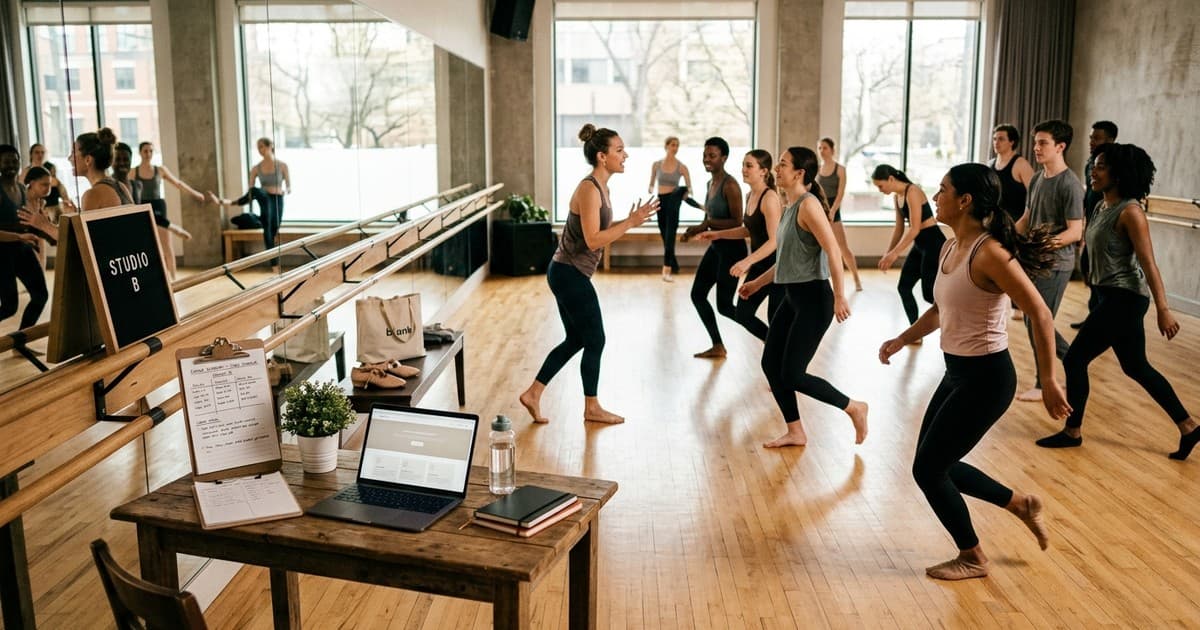
- Mirrors: Full-length mirrors along at least one wall are standard for dance studios. They allow students to self-correct and are essential for examination preparation.
- Barres: Wall-mounted or freestanding barres for ballet. These are inexpensive (£100-£300 per barre) but essential.
- Size: A minimum of 60-80 square metres for a class of 10-15 students. Larger for older students and performance work.
- Sound system: A reliable, good-quality sound system with Bluetooth connectivity. Music is integral to every dance class.
- Waiting area: Parents need somewhere to wait. A reception area with seating, ideally with a window or screen into the studio, is highly valued by parents.
Qualifications for Dance Teaching
The qualifications you need depend on the styles you teach and the examining bodies you affiliate with:
- RAD ballet: Certificate in Ballet Teaching Studies (CBTS) or RAD Teaching Diploma
- ISTD: Associate (DDE), Licentiate, or Fellowship in your chosen genre
- Generic dance teaching: Level 3/4 Diploma in Dance Teaching (various awarding bodies)
- Degree route: BA in Dance Education or similar from a recognised institution
Regardless of your dance qualifications, you also need an enhanced DBS check, safeguarding training, and a first aid certificate.
Grading and Examination Systems
Examinations are a central part of UK dance culture. They provide:
- Structured progression that motivates students and satisfies parents
- External validation of your teaching quality
- Revenue opportunities (examination entry fees, extra classes for exam preparation)
- UCAS points at higher grades (RAD and ISTD vocational examinations carry UCAS tariff points)
Plan your examination schedule early. Most examining bodies require you to book examiners months in advance, and the logistics of exam day (scheduling, warm-up space, accompanists, results administration) require careful planning.
AMES simplifies this considerably by letting you track each student's examination history, schedule exam classes separately, and communicate exam information to parents through the parent portal.
The Performance Calendar
Shows, showcases, and performances are the heartbeat of a dance school. They build community, motivate students, and are your single best marketing tool. Parents share performance videos and photos widely, generating organic word-of-mouth.
Planning Essentials
- Book your venue early: Local theatres fill up fast. Book 6-12 months ahead for end-of-year shows.
- Budget carefully: Venue hire, lighting, sound, programme printing, and costume contributions all add up. Most schools charge a performance fee of £15-£40 per student to cover costs.
- Costume management: This is one of the biggest administrative headaches in dance. You need systems for sizing, ordering, distributing, and returning costumes. Some schools build costume libraries and reuse them, which is more sustainable and cost-effective.
- Rehearsal schedule: Build extra rehearsal time into your timetable in the weeks before a show. Communicate the schedule clearly to parents well in advance.
Insurance for Dance Schools
Dance carries specific insurance considerations:
- Public liability: Essential. £10 million is the standard level for most venue hirers.
- Professional indemnity: Covers claims related to your teaching.
- Performance insurance: Event-specific cover for shows and performances, covering cancellation, audience injury, and equipment damage.
- Employer's liability: Required if you employ other teachers, even part-time.
Actionable Takeaways
- Choose your examining body affiliations and begin the registration process. RAD plus one other (ISTD or BTDA) is a common and effective combination.
- Prioritise your venue search. Sprung flooring is non-negotiable for regular dance practice. Community halls without appropriate flooring will limit your growth and risk injury claims.
- Plan your first show early. Even a small studio showcase in your first year builds enormous parent goodwill and generates word-of-mouth referrals.
- Set up proper student tracking from day one. Dance involves multiple disciplines, levels, and examination entries per student. A system like AMES that tracks all of this in one place will save you hours of administration every week.