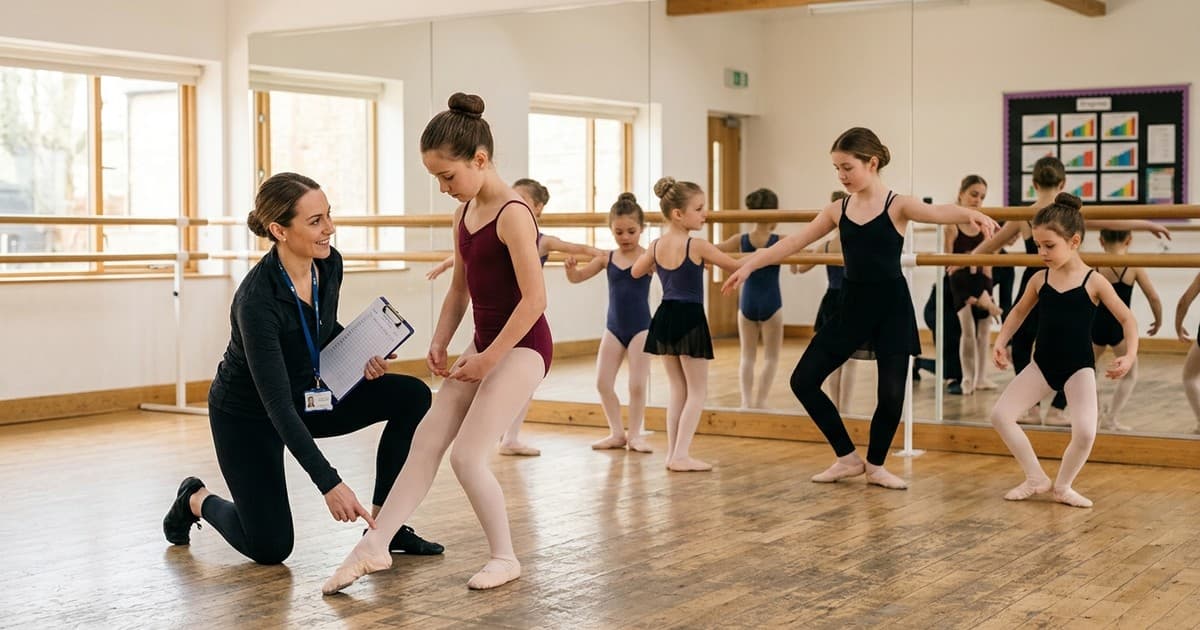
Progression Is the Engine of Retention
The exam grade structure is the spine of a dance school. It gives pupils something to work towards, parents a measure of progress, and teachers a framework for their lesson planning. But the grade structure only works if progression is managed actively. Left to chance, pupils stagnate at levels they have outgrown, promising dancers are entered for exams before they are ready, and parents lose sight of where their child is headed.
Effective progression management means knowing exactly where every pupil is in their journey, having a clear plan for where they are going next, and communicating that plan to parents in a way that builds confidence and commitment. It is the difference between a school that retains pupils through to vocational grades and one that haemorrhages them after the early grades when the novelty wears off.
This guide covers the practical systems you need to manage progression across your entire school, regardless of how many exam boards, disciplines, or teachers you work with.
Syllabus Checklists and Progress Tracking
Breaking the Syllabus into Teachable Units
Every examination syllabus, whether RAD, ISTD, or IDTA, can be broken down into a checklist of individual components. For RAD Grade 3 ballet, this might include port de bras exercises, centre practice, allegro sequences, and set dances. For ISTD modern Grade 4, it might cover warm-up phrases, travelling sequences, improvisation tasks, and the set study. Each component can be marked as not started, in progress, or examination-ready.
Creating these checklists for every grade in every discipline you teach is an upfront investment that pays off enormously. Teachers use them to plan lessons (which components need the most work this term), to assess readiness (how many components are at exam standard), and to communicate with parents (your child has mastered eight of twelve components and is on track for the summer exam session).
Digital vs. Paper Tracking
Paper progress cards have a long tradition in dance schools. Teachers tick off skills as they are demonstrated, and parents see the card at the end of term. The problem with paper is that it does not aggregate. You cannot easily see how many pupils are exam-ready across the whole school, or which components are causing the most difficulty across a grade level.
Digital tracking in a system like AMES allows you to update progress in real time, generate school-wide reports, and give parents a view of their child's progress through a portal. It also means that if a teacher is absent, the cover teacher can see exactly where the class is up to in the syllabus.
Readiness Indicators and Mock Exams
Assessing Exam Readiness
The decision to enter a pupil for an exam should be based on evidence, not guesswork. A readiness indicator system uses the syllabus checklist data to provide a clear signal. If a pupil has all components marked as examination-ready, they are a strong candidate. If they have most components ready but one or two in progress, they might benefit from another term of preparation. If significant components are still at the in-progress stage, they are not ready.
This objective approach protects both the pupil and the school. Entering pupils who are not ready leads to poor results, which demoralises the pupil and erodes parental confidence. On the other hand, holding pupils back unnecessarily frustrates families who feel their child is being held to an unreasonably high standard. A transparent, checklist-based readiness system removes the subjectivity and gives parents a clear rationale for the decision.
Running Mock Exams
Mock exams are a powerful tool for both assessment and preparation. Schedule them four to six weeks before the actual exam session. Run them as closely as possible to the real thing: pupils in uniform, an examiner-style setup (even if the examiner is a senior teacher or visiting colleague), and the full syllabus performed in exam order.
After each mock exam, provide specific feedback to every pupil. Identify the components that need more work and give actionable advice: "Your port de bras in the adage is lovely, but you need to work on turnout in the allegro section. Practise the fifth position relevés we did last week." This targeted feedback is far more useful than a general "you need to practise more."
Share mock exam results with parents, along with a recommendation about whether to proceed with the exam entry. Parents appreciate being involved in this decision rather than simply being told their child is or is not being entered.
Batch Grade Updates and Administrative Efficiency
Processing Exam Results in Bulk
When exam results arrive, you typically receive them for an entire session at once, sometimes fifty or a hundred results in a single batch. Processing these individually, updating each pupil's record one at a time, is tedious and error-prone. A batch update system allows you to enter all results for a session at once, typically by uploading or entering the data in a table format, and having the system update every pupil's record automatically.
After the batch update, the system should automatically identify pupils who have passed and are ready to move up to the next class level. This generates a promotion list showing which pupils should be moved from, say, Grade 3 ballet to Grade 4 ballet at the start of next term. Review this list, make any adjustments for pupils you want to hold back or advance differently, and then process the moves.
Parent Notifications
Parents want to know exam results as soon as possible. Once you have processed the results, send notifications to every family. A personalised message, generated from the batch data, that says "Congratulations, Emma achieved a Merit in her RAD Grade 3 ballet examination" is far more impactful than a generic class email. Include information about what happens next: which class their child will move to, when the next exam session is likely to be, and how to collect the certificate.
Progression Planning and the Long View
Mapping the Pupil Journey
The most successful dance schools think about progression not just exam by exam, but across the full journey from a four-year-old's first ballet class to a teenager's vocational qualification. Map out the typical progression pathway for each discipline: how many terms at each grade level, when pupils might branch into additional disciplines, when vocational training becomes an option, and what the natural exit points are.
This long-view planning helps you anticipate demand. If you know that most pupils take two years at Grade 3 and you currently have twenty pupils in Grade 3, you can predict that in two years you will need Grade 4 capacity for approximately twenty pupils. This feeds into your timetabling, staffing, and room planning.
Handling Pupils Who Plateau
Not every pupil progresses at the same rate, and some will plateau at a particular level. This is normal, but it needs managing. If a pupil has been at the same grade for significantly longer than their peers, have a conversation with the parent about whether the current class is still right for them. Some pupils benefit from switching to a different discipline where they progress more naturally. Others may be perfectly happy at their current level and simply enjoy the classes without the pressure of exams. Both outcomes are fine, but the conversation needs to happen to prevent quiet disengagement.
Key Takeaways
- Break every exam syllabus into a component checklist and use it to track each pupil's progress through the grade.
- Use digital tracking rather than paper to enable school-wide reporting, parent portal access, and continuity when teachers are absent.
- Base exam entry decisions on objective readiness indicators drawn from the syllabus checklist, not on guesswork.
- Run mock exams four to six weeks before real exams and provide specific, actionable feedback to every pupil.
- Process exam results as batch updates to save time and reduce errors, then generate automatic promotion lists.
- Send personalised parent notifications with results, next steps, and certificate collection details.
- Map the full pupil journey from first class to vocational level to anticipate demand and plan capacity.
- Have proactive conversations with parents of pupils who plateau, offering alternative pathways rather than letting them disengage.