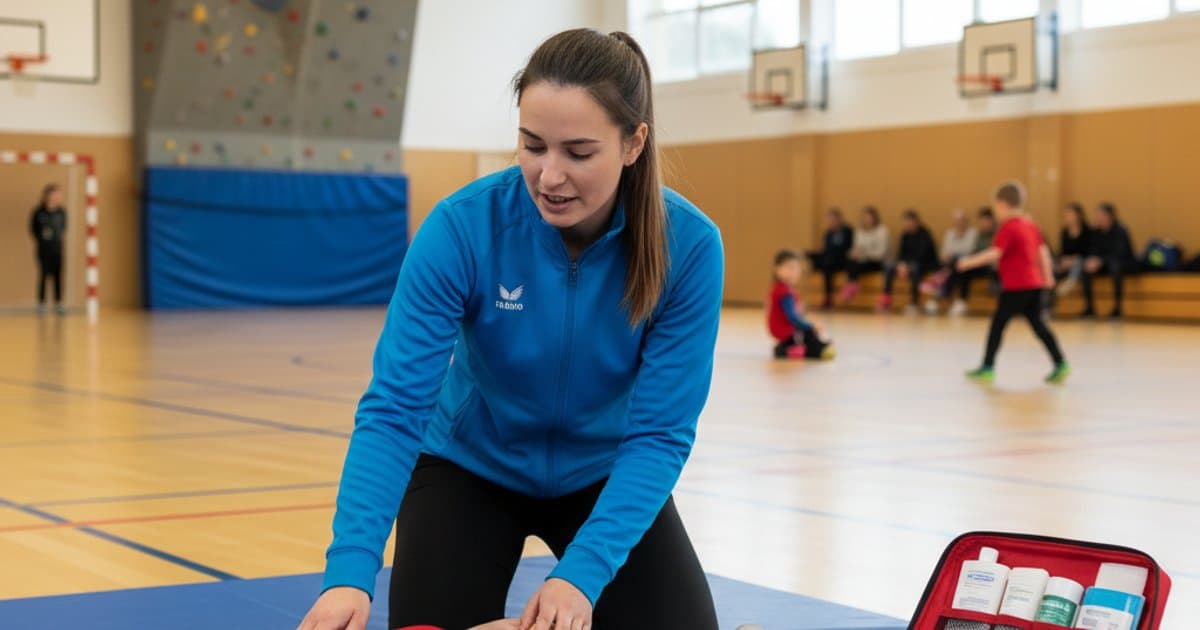
Legal Requirements for First Aid Provision
The Health and Safety (First-Aid) Regulations 1981 require employers to provide adequate and appropriate first aid equipment, facilities, and trained personnel. If you are self-employed with no employees, the regulations do not technically apply to you, but you still have a duty of care to your participants under common law and the Health and Safety at Work Act 1974. In practice, this means you need first aid provision regardless of your employment status.
"Adequate and appropriate" depends on the nature of your activities, the number of participants, the age of participants, and the location and accessibility of emergency services. For a children's activity provider, the bar is higher than for an office environment because you are working with minors in an active setting where injuries are more likely.
What the Law Requires
- At least one person trained in first aid must be present at every session
- A suitably stocked first aid kit must be available and accessible at every venue
- You must have a written first aid policy or procedure
- You must record all incidents where first aid is administered
- Information about first aid arrangements must be communicated to staff, volunteers, and parents
Your governing body (Swim England, British Gymnastics, the FA, etc.) will often have requirements that exceed the legal minimum. Always check your governing body's specific guidance, as failure to comply could affect your insurance, accreditation, or membership.
First Aid Training Courses
Not all first aid courses are equal, and the right course depends on who you work with and what activities you deliver.
Paediatric First Aid (PFA)
If you work with children under the age of five, paediatric first aid is essential. This is a 12-hour course (usually delivered over two days) that covers first aid techniques specific to infants and young children, including:
- Infant and child CPR (which differs significantly from adult CPR)
- Choking in infants and children
- Febrile convulsions
- Meningitis recognition
- Childhood illnesses and conditions
- All standard first aid content (wounds, burns, fractures, etc.)
For providers registered with Ofsted (such as breakfast clubs, after-school clubs, or holiday clubs caring for children under eight), at least one person with a current paediatric first aid certificate must be on the premises at all times. This is an Ofsted registration requirement under the Early Years Foundation Stage (EYFS) framework.
Emergency First Aid at Work (EFAW)
This is a one-day (six-hour) course covering basic life-saving first aid: CPR, choking, bleeding, burns, and unconsciousness. It is the minimum standard for most workplaces and a reasonable baseline for activity providers working with older children and adults. However, for those working with younger children, paediatric first aid provides more appropriate training.
First Aid at Work (FAW)
This is a three-day (18-hour) course that provides the most comprehensive first aid training. It covers everything in the EFAW course plus more detailed content on specific injuries, medical conditions, and casualty management. If you run a larger operation with multiple staff, having at least one person with FAW certification is good practice.
Sport-Specific First Aid
Some governing bodies require or recommend sport-specific first aid training in addition to general first aid. For example:
- Swim England requires pool-side assistants and teachers to hold a current rescue qualification (such as NRASTC — National Rescue Award for Swimming Teachers and Coaches)
- British Gymnastics recommends first aid training that covers musculoskeletal injuries relevant to gymnastics
- The FA requires certain coaching qualifications to include emergency first aid modules
Renewal
First aid certificates are valid for three years. After that, you must complete a full refresher course, not just a short update. Plan renewals well in advance so you never have a gap in coverage. It is good practice to stagger renewal dates across your team so that multiple people's certificates do not expire at the same time.
First Aid Kit Contents
There is no fixed list prescribed by law, but the HSE provides guidance on what a standard first aid kit should contain. For a children's activity provider, the following represents a practical, comprehensive kit:
Standard Kit Contents
- A leaflet with general first aid guidance (HSE publishes a free one)
- 20 individually wrapped sterile plasters (assorted sizes), preferably blue detectable plasters if food is handled
- 2 sterile eye pads
- 4 individually wrapped triangular bandages
- 6 safety pins
- 2 large wound dressings (18cm x 18cm)
- 6 medium wound dressings (12cm x 12cm)
- 2 pairs of disposable nitrile gloves
- 1 pair of tough-cut scissors (clothing shears)
- Microporous tape
- Sterile saline eye wash (at least 2 pods)
- A resuscitation face shield or pocket mask
- A foil emergency blanket
- Clinical waste bag
Additional Items for Activity Settings
- Instant cold packs: Essential for bumps, sprains, and bruises. Have at least four available per session
- Conforming bandages: For wrapping sprains and supporting injured limbs
- Finger splints: Useful for ball sports and gymnastics
- Adhesive wound closure strips: For closing small cuts without glue or stitches
- Burns gel sachets: If hot equipment or surfaces are present
- Child-friendly plasters: Colourful or character plasters can calm a distressed young child
Kit Maintenance
Check your first aid kit at least monthly. Replace any items that have been used, are damaged, or have passed their expiry date. Sterile items have a shelf life, typically marked on the packaging. Assign a specific person the responsibility of checking the kit and make it part of your monthly safety routine.
Keep your first aid kit in a clearly marked, easily accessible location that all staff know about. If you work across multiple venues, you need a portable kit that travels with you. A well-organised bag or case is more practical than a wall-mounted box when you are moving between halls and pools.
Activity-Specific First Aid Considerations
Different activities carry different injury profiles, and your first aid preparation should reflect this.
Pool-Side First Aid
Swimming and pool-based activities require specific provisions:
- A spinal board or rigid stretcher for suspected spinal injuries (the pool operator usually provides this)
- Rescue equipment: reach poles, throw bags, torpedo buoys
- Staff trained in in-water rescue and spinal injury management
- A poolside telephone for calling emergency services (mobile phones may not be permitted on the pool deck in some facilities)
- Awareness of secondary drowning: know the signs and advise parents to seek medical attention if a child shows breathing difficulties, persistent coughing, or lethargy in the hours after a near-drowning or significant water swallowing incident
Contact Sports and Gymnastics
- Higher risk of sprains, strains, and fractures: ensure your first aider is confident in assessing limb injuries and immobilising suspected fractures
- Head injuries: follow your governing body's concussion protocol. When in doubt, sit the participant out and advise the parent to seek medical assessment. Head injuries in children can deteriorate hours after the initial impact
- Dental injuries: knocked-out teeth in older children can sometimes be replanted if handled correctly. Keep the tooth in milk and get to a dentist within 30 minutes
Dance and Performing Arts
- Soft tissue injuries: muscle strains, ligament sprains, and overuse injuries are common. RICE protocol (Rest, Ice, Compression, Elevation) is your first response
- Fainting: warm studios, physical exertion, and locked knees can cause fainting, particularly in younger teenagers. Know how to manage an unconscious but breathing casualty
Outdoor Activities
- Insect stings and bites: carry antihistamine cream (noting that you cannot administer medication without parental consent, but you can have it available for parents to administer)
- Heat-related illness: recognise the signs of heat exhaustion (pale, cool skin, heavy sweating, nausea) and heat stroke (hot, dry skin, confusion, loss of consciousness). Heat stroke is a medical emergency requiring 999
- Hypothermia: in colder months, watch for shivering, confusion, and drowsiness, particularly in wet or windy conditions
Automated External Defibrillators (AEDs)
Sudden cardiac arrest, while rare in children, does occur, and an AED can be life-saving. An AED analyses the heart's rhythm and delivers a shock if needed. Modern AEDs are designed to be used by anyone, with voice prompts guiding the user through each step.
Do You Need One?
There is no legal requirement for activity providers to have an AED, but the case for having access to one is strong. The British Heart Foundation recommends that every school, sports club, and community venue has an AED available. If your venue does not have one, consider whether your organisation should invest in one (typically £800 to £1,500) or campaign for one to be installed at the venue.
Placement and Maintenance
An AED should be mounted in a visible, accessible location, ideally within a two-minute walk of the activity area. Public access AEDs are often placed in unlocked cabinets outside buildings. Check the device regularly: most AEDs perform daily self-checks and display a green light when ready. Replace pads and batteries according to the manufacturer's schedule.
Training
While AEDs are designed for use without training, having at least some of your team trained in AED use significantly increases confidence and speed of response in an emergency. AED training is usually included in First Aid at Work and Emergency First Aid at Work courses, and standalone AED courses are available from the British Heart Foundation and St John Ambulance.
Managing Medical Conditions and Allergies
Children attending your activities may have medical conditions that require specific first aid responses. You need a system for knowing about these conditions and being prepared to act.
Information Gathering
Collect medical information from parents at the point of registration. Your registration form should ask about:
- Diagnosed medical conditions (asthma, epilepsy, diabetes, heart conditions)
- Allergies (including food allergies, drug allergies, and environmental allergies)
- Medication the child takes regularly or may need in an emergency
- Any previous serious medical episodes
- Emergency contact details (at least two contacts)
- GP details
Store this information securely and ensure it is accessible to the team member delivering each session. If you use AMES or a similar management platform, medical information can be stored digitally alongside the child's record, accessible to authorised staff but protected by appropriate access controls.
Emergency Medication
Some children carry emergency medication: inhalers for asthma, adrenaline auto-injectors (EpiPens or similar) for severe allergies, or emergency epilepsy medication. You should:
- Know which children carry emergency medication and what it is for
- Ensure the medication is present at every session (not locked in a bag in another room)
- Know how to assist with administration. While legislation varies, a reasonable interpretation of current guidance is that in a life-threatening emergency, any trained person can administer an adrenaline auto-injector. Training in auto-injector use is available from allergy charities and first aid providers
- Have a written individual healthcare plan for any child with a serious medical condition, agreed with the parent
Anaphylaxis
Anaphylaxis is a severe, potentially life-threatening allergic reaction. Know the signs: swelling of the face, lips, or throat; difficulty breathing; hives or rash; dizziness or collapse. If you suspect anaphylaxis:
- Call 999 immediately
- Help the child use their adrenaline auto-injector if available (inject into the outer thigh, through clothing if necessary)
- Lie the child flat with legs raised (unless they are struggling to breathe, in which case sit them up)
- A second dose can be given after 5 to 15 minutes if symptoms do not improve and the ambulance has not arrived
Record-Keeping
Thorough first aid records protect the child, inform parents, and protect your business if questions arise later.
- Record every first aid incident, however minor, in a consistent format
- Include the date, time, name of the child, nature of the injury or illness, treatment given, name of the first aider, and any follow-up action
- Inform parents of any first aid treatment their child received, ideally in person at collection and followed up in writing
- Keep records securely for a minimum of three years, or until the child reaches 21 if the incident involved a minor (to allow for potential legal claims)
- Review your first aid records regularly to identify patterns (are injuries happening in a particular area, during a particular activity, or at a particular time?) and take action to address recurring issues
Key Takeaways
- At least one trained first aider must be present at every session, with a stocked first aid kit immediately accessible.
- Choose the right training course: paediatric first aid for providers working with under-fives, emergency first aid at work as a minimum for others, and sport-specific qualifications where required by your governing body.
- Renew certificates every three years and stagger renewals across your team to avoid gaps in coverage.
- Stock your kit appropriately for your activity type, including cold packs, conforming bandages, and any activity-specific items.
- Consider an AED: they are increasingly affordable and could save a life. Check whether your venue already has one.
- Collect and securely store medical information for every child, and ensure it is accessible to staff at every session.
- Know how to respond to anaphylaxis and ensure your team is trained in adrenaline auto-injector use.
- Record every first aid incident and review records regularly to identify and address patterns.